
Claude Fable 5.1 vs GPT 6 Astra: Which SOTA Model Writes Better Prompts?
Claude Fable 5.1 vs GPT 6 Astra: I gave both the same 5 briefs, ran their prompts through 5 image and video models, and measured every result.

Every benchmark I read about frontier models tests them on code, on maths, on long-context recall. None of them test the thing my team actually asks a frontier model to do twenty times a day: write the prompt for a different model. In a real content pipeline the LLM is rarely the last step. It is the step that turns a messy brief from marketing into 180 words that an image or video model can actually render.
So I ran that test properly. Five briefs, five different media models on Segmind, and two frontier LLMs writing the prompt for each one: Claude Fable 5.1 and GPT 6 Astra. Same brief, same constraints, same media parameters, same seeds. The only variable in the whole experiment is which model wrote the prompt.
The result was much closer than the price difference between them, and the most useful finding had nothing to do with which model won.
How the test was built
Each of the five cases got a single prompt string containing three blocks: a description of the target media model and its real constraints, the creative brief, and the hard constraints. The rules at the end were strict: output the generation prompt and nothing else, one paragraph, maximum 180 words, no markdown fences, no preamble.
That exact string went to both models byte for byte. Fable 5.1 ran at its default effort of low, because that is what you get out of the box. Whatever each model returned was then pasted verbatim into the media model with no cleanup from me.
The media parameters were frozen per case. Both contenders in the poster case hit Ideogram 3 at QUALITY, 2x3, style_type: DESIGN, magic_prompt: OFF and the same seed of 424242. Both video cases used a fixed seed too. If the outputs differ, the prompt is the reason.
Case 1: product hero on GPT Image 2.5 Flare
The brief was a 340g coffee bag for a DTC roaster, with four strings that had to be legible on the pack: NORTHBOUND, Single Origin Filter Roast, Huila, Colombia and 340 g. Landscape, clean right third for a headline overlay, no people.
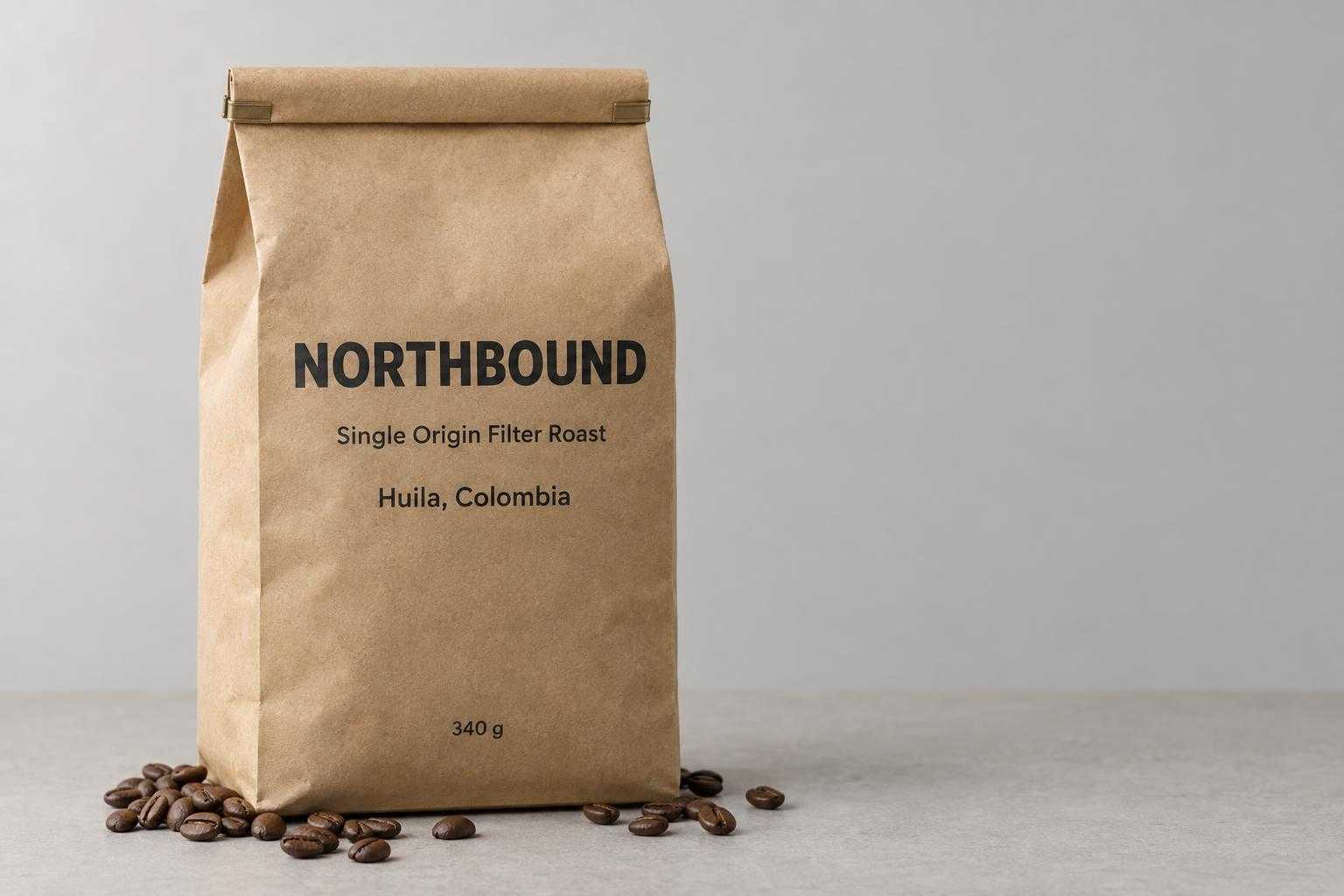
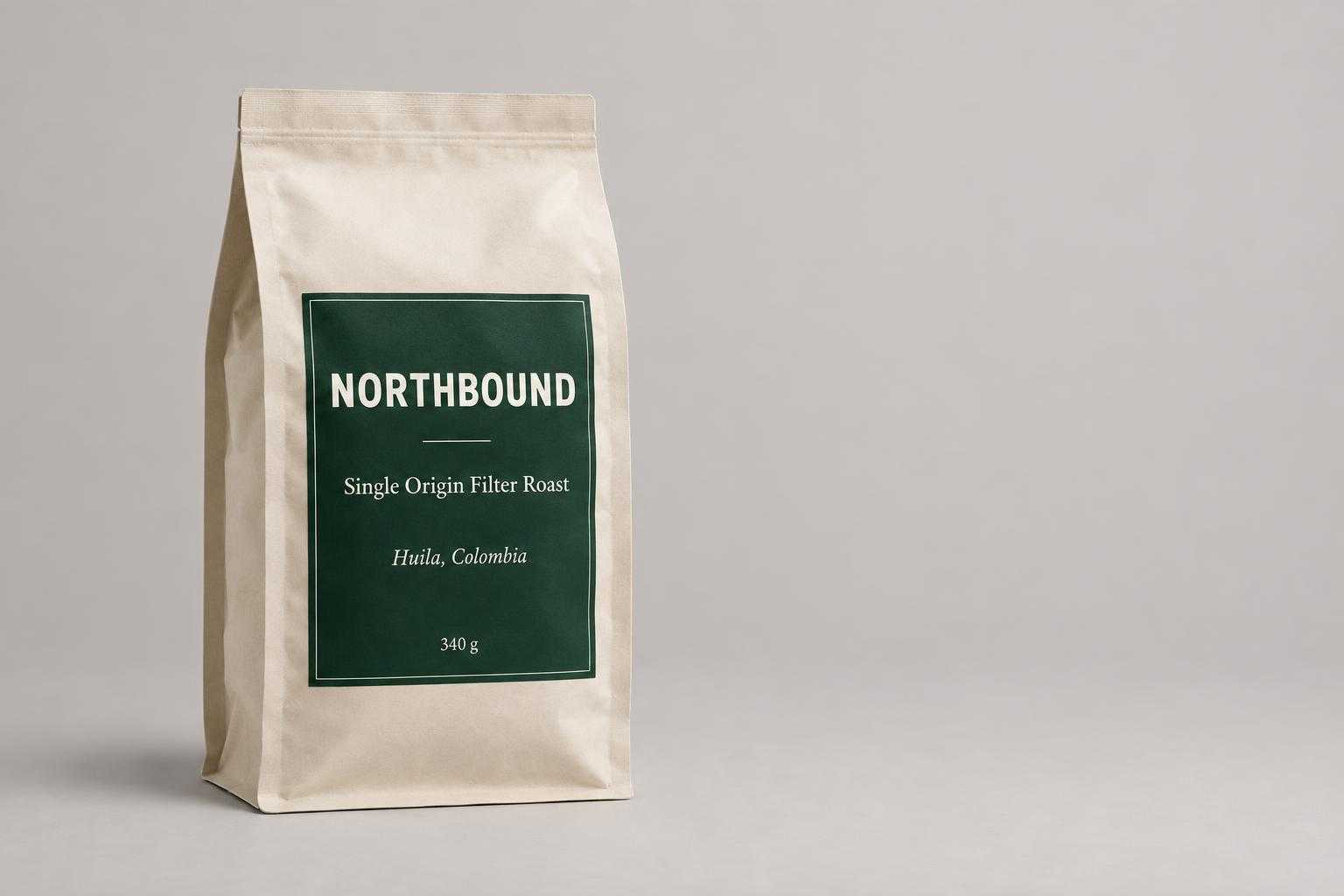
Both are four for four on the required strings, both hold the right third clear, both are usable today. The interesting part is that they invented different products. Fable specified matte kraft paper with a folded tin tie and scattered beans, and got exactly that. Astra specified a warm ivory pouch with a deep forest green label panel, and got exactly that. Neither was asked for a colourway, so each one made a brand decision on your behalf. That is worth knowing if you are generating a set and expecting consistency.
Case 2: festival poster on Ideogram 3
This is where the two separated. Three exact strings were required: the title THE LONG SIGNAL, the tagline Nobody was listening, and a credits line A FILM BY MAYA OKONKWO.
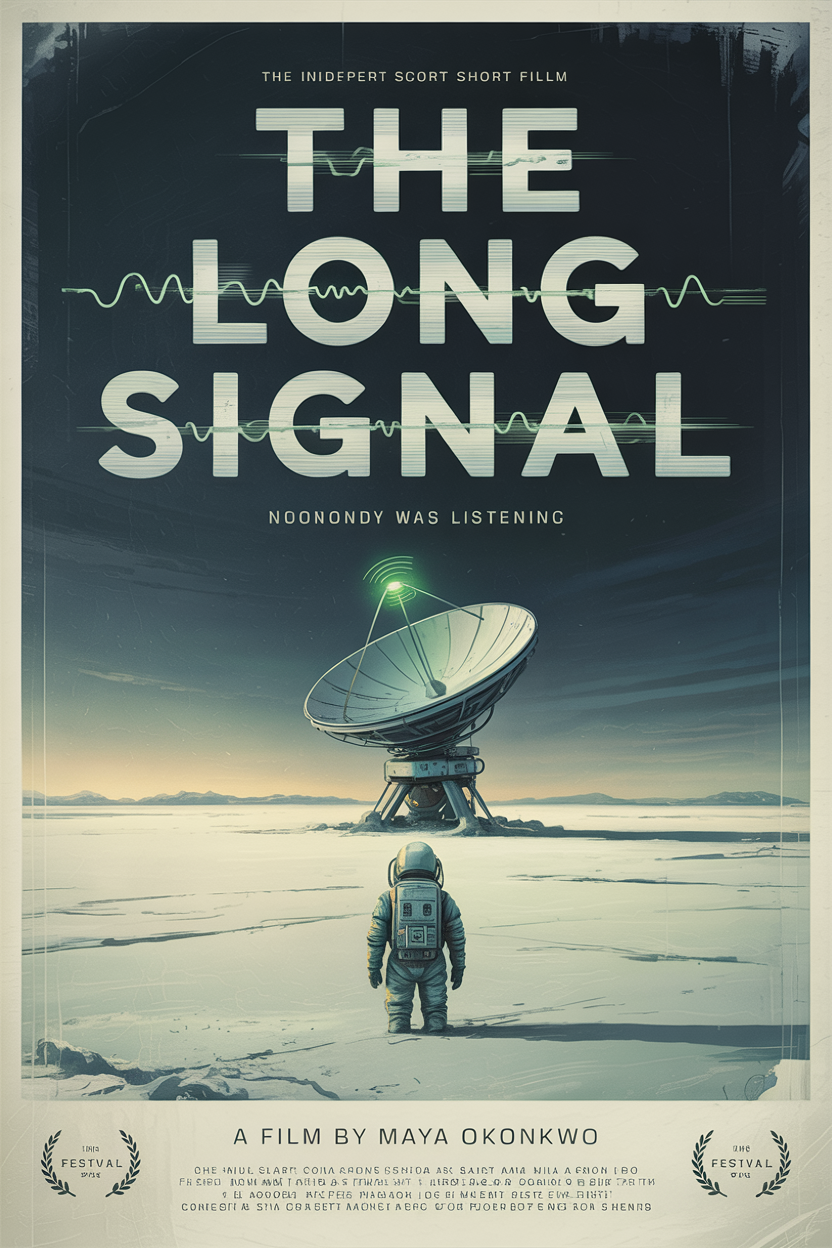
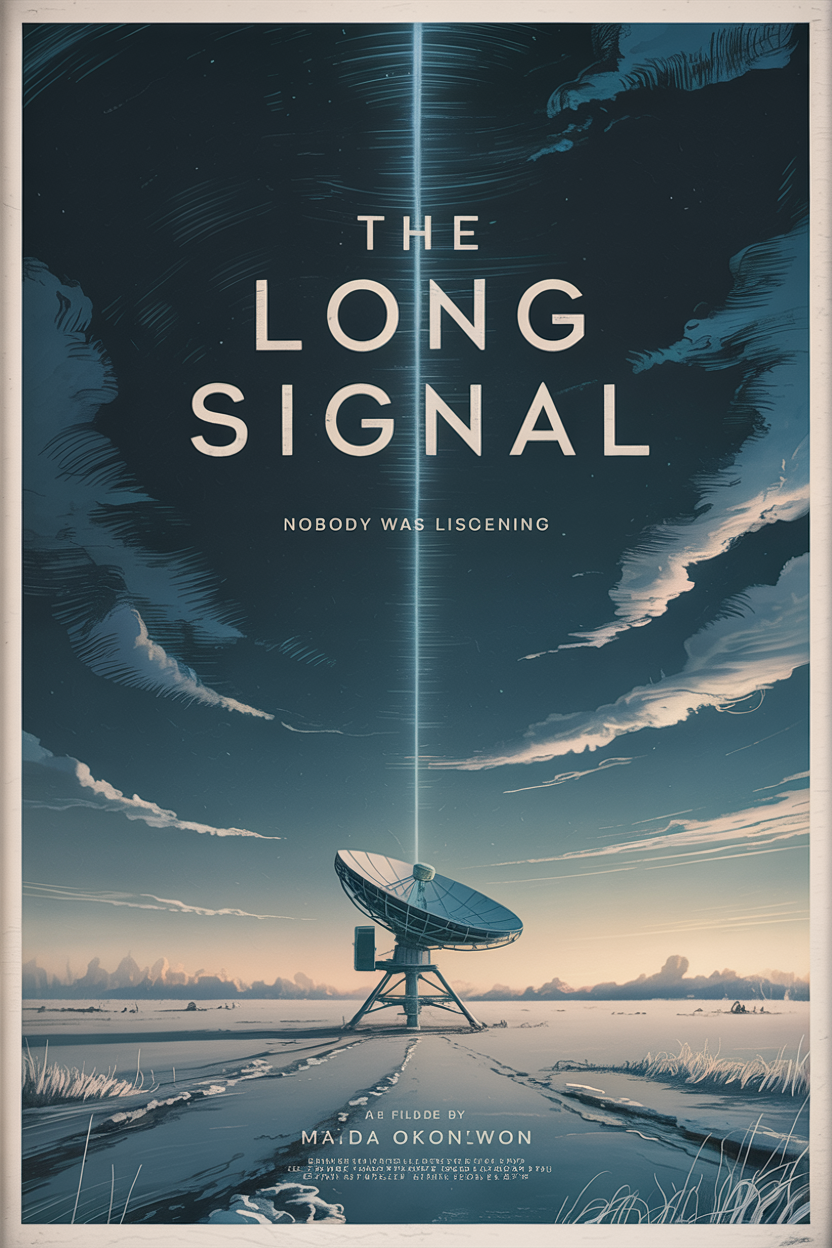
Fable landed two of three exact strings, Astra one of three. But Fable made a mistake Astra did not. Its prompt opened with "Cinematic festival one-sheet movie poster, portrait layout, for the independent sci-fi short film THE LONG SIGNAL". Ideogram treated that description of the artifact as copy to print, and stamped a garbled kicker across the top of the poster reading "THE INIDEPERT SCORT SHORT FILLM".
That is the single most transferable lesson in this whole test. On a typography-tuned model, any sentence in your prompt that describes what the thing is is a candidate to be rendered as text on the thing. Describe the scene, name the strings you want, and say nothing else about the format.
Case 3: docs diagram on Nano Banana 2
A flat isometric illustration explaining webhook retries with exponential backoff. Five strings required: WEBHOOK RETRY, 1s, 4s, 16s and DEAD LETTER QUEUE.
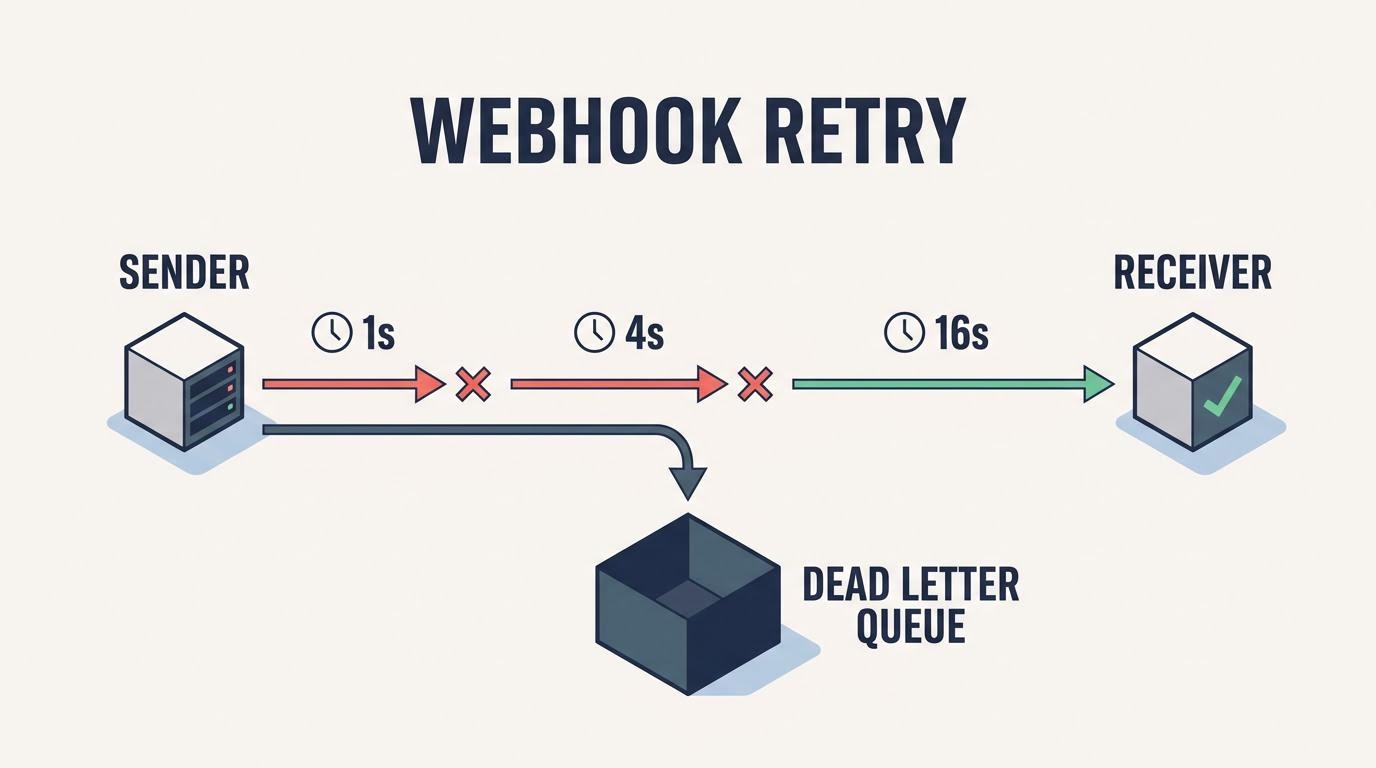
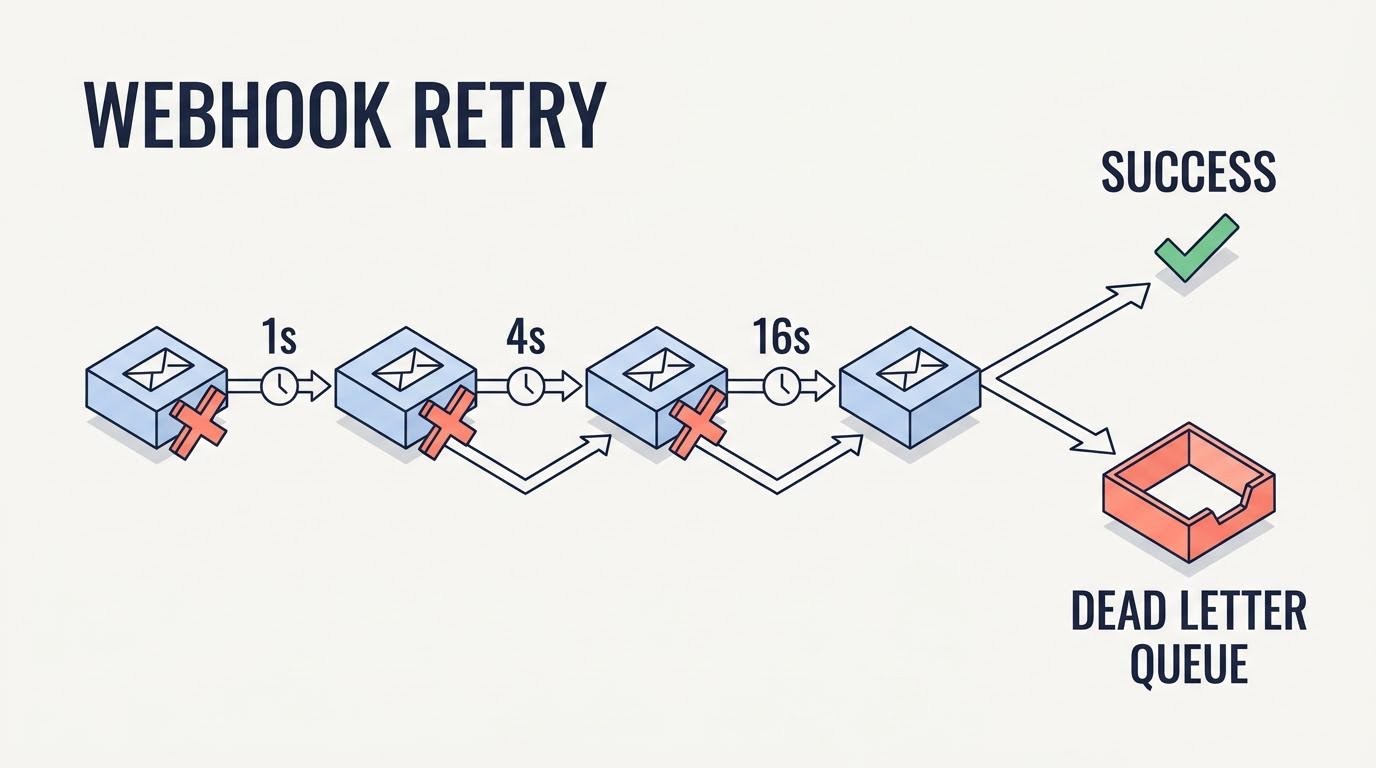
Both perfect on text, and they made opposite structural choices. Fable drew a linear path from SENDER to RECEIVER with a branch down to the dead letter queue, which reads instantly but is logically odd: it shows a success and a dead letter outcome at the same time, with the branch hanging off the sender rather than off the last failed attempt. Astra drew four attempt blocks and forked the final one into SUCCESS and DEAD LETTER QUEUE, which is the correct semantics but a busier picture.
Astra also respected the brief's cap of six labelled elements exactly. Fable shipped seven. And neither one got what both prompts explicitly asked for: visibly widening gaps to convey the backoff. The label spacing is near uniform in both. That is a model limitation, not a prompt-writing failure, and no amount of prompt engineering fixed it.
Case 4: vertical social ad on Seedance 2.0 Mini
Five seconds, 720p, 9:16, synchronised audio in the same pass. No faces, diegetic sound only, an explicit "no music" clause because Seedance refuses prompts that ask for it.
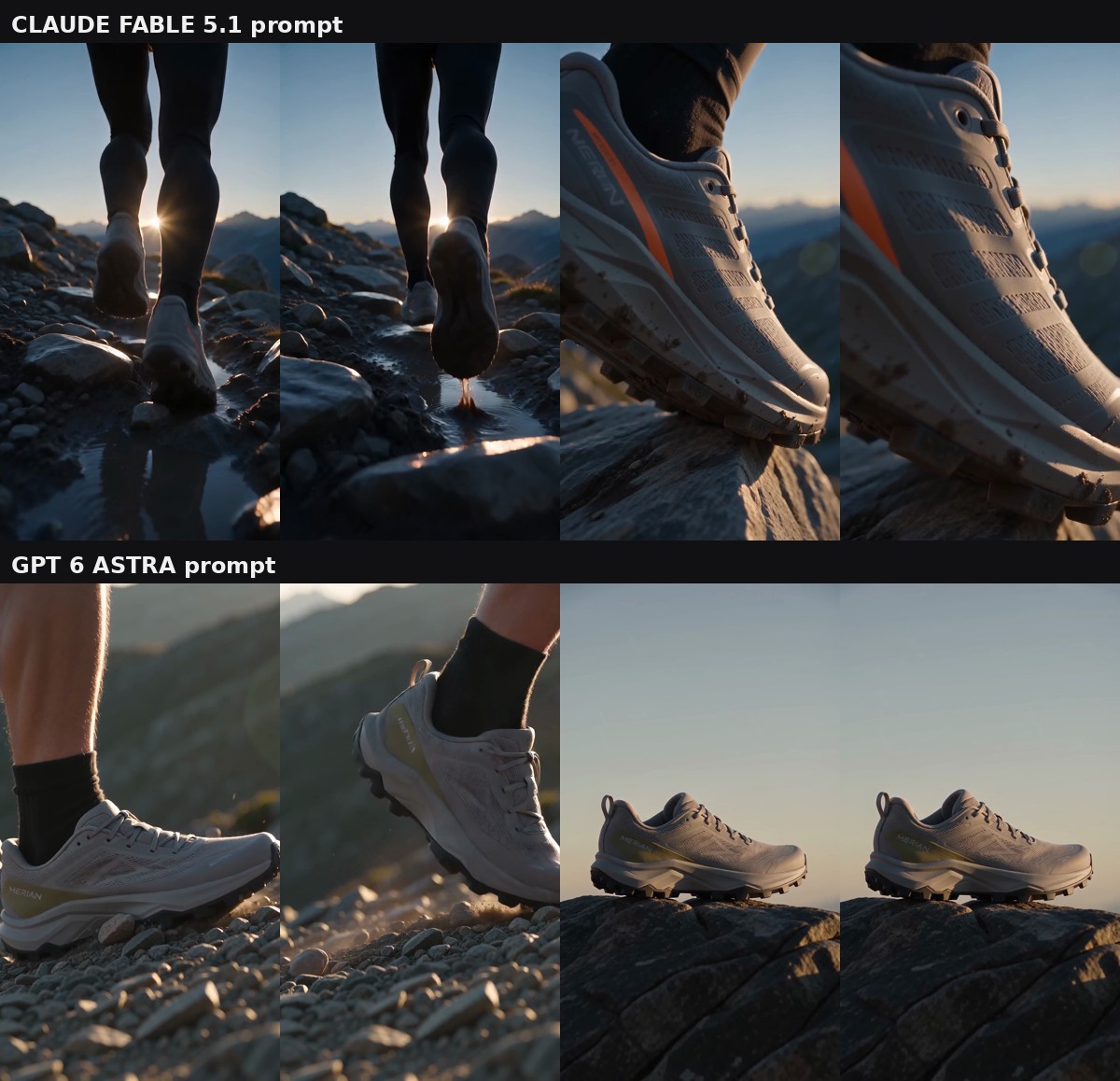
Both structured the shot list properly and both kept every face out of frame.
The branding detail is the one to take away. Astra asked for "the small embossed MERIDIAN wordmark legible on the outer side" and got crisp, well-lit lettering that reads MERIAN. Fable asked for no text at all and Seedance covered the shoe upper in garbled embossed pseudo-lettering anyway. Asking for a wordmark on a video model gets you a confident misspelling. Not asking for one does not get you a clean shoe.
Case 5: cinematic product film on LTX 2.5 Fast
Six seconds, 720p, 16:9, one continuous camera move, no cuts, with sound design described in the prompt.
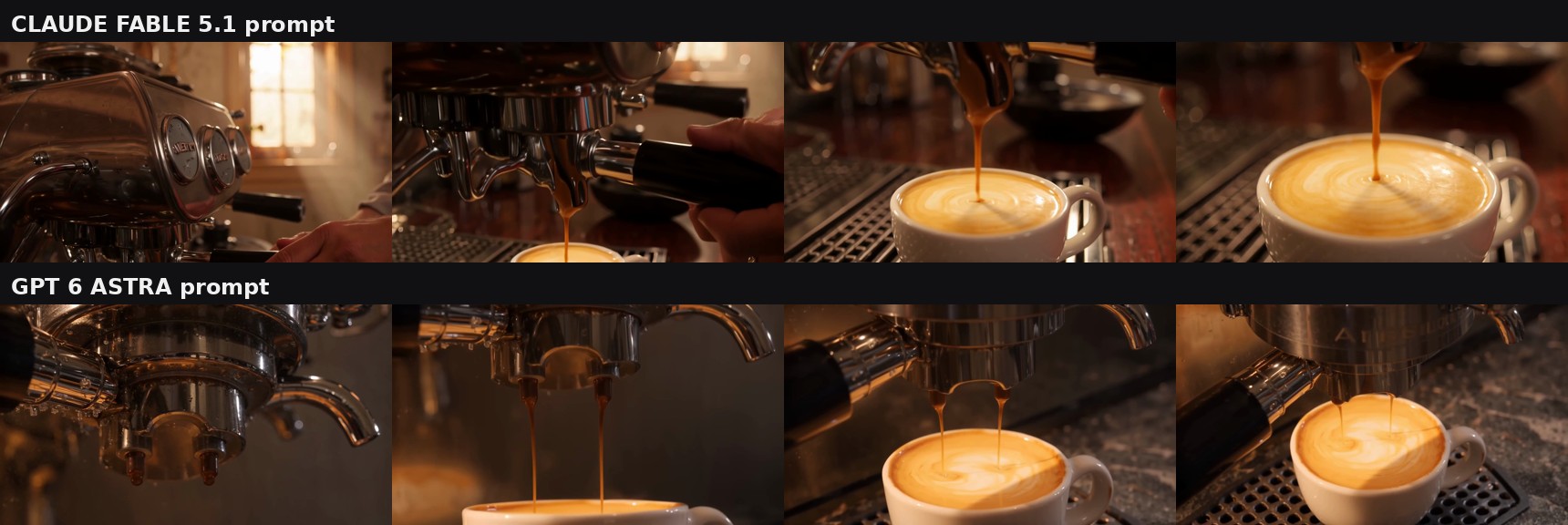
Both are correct. Scene detection finds no transition above a 0.08 score in either clip, so both genuinely held one continuous move for six seconds, which is what both prompts demanded. Fable went warm and domestic with a window, hands on the lever and a wider reveal. Astra went dark and clinical with no people at all, staying in macro on the group head the whole time. Astra was stricter than the brief required, which is the safer default for a product page.
What it actually cost
The prompt-writing step, all five cases, at default settings:
| Case | Fable 5.1 in/out | Fable 5.1 | Astra in/out | Astra |
|---|---|---|---|---|
| Product hero | 544 / 376 | $0.030300 | 343 / 241 | $0.016254 |
| Festival poster | 535 / 403 | $0.031875 | 317 / 230 | $0.015404 |
| Docs diagram | 506 / 375 | $0.029763 | 310 / 347 | $0.021472 |
| Vertical ad | 533 / 416 | $0.032662 | 339 / 394 | $0.024244 |
| Product film | 490 / 361 | $0.028688 | 314 / 225 | $0.015109 |
| Total | 2608 / 1931 | $0.153287 | 1623 / 1437 | $0.092484 |
Fable 5.1 cost 1.66x what Astra cost. Only part of that is the published rate difference, which is 1.19x on both input and output ($12.50 and $62.50 per million against $10.50 and $52.50). The rest is token accounting. For the identical input string, Fable was billed between 1.56x and 1.69x the input tokens Astra was, averaging 1.61x across the five cases. If you are modelling spend from a character count, that gap will surprise you.
Two more operational differences. Fable reported zero thinking tokens on all five calls at default effort, so its spend was flat and predictable. Astra has no effort control and spent hidden reasoning tokens on two of five calls, 117 and 163, with no way to switch that off. And Fable was more consistent on latency: 9.0 to 11.4 seconds, a 2.4 second band, against Astra's 8.6 to 14.5 seconds.
The media step cost the same on both sides, because the parameters were frozen: $0.0529 on GPT Image 2.5 Flare, $0.1125 on Ideogram 3, $0.08 on Nano Banana 2, $0.190575 on Seedance 2.0 Mini and $0.675 on LTX 2.5 Fast. Which means the prompt-writing step ran from 2% of the render it was feeding, on the LTX case with Astra, to 57% of it on the cheapest image case with Fable. On the two video cases, the model that wrote the prompt never cost more than a fifth of the clip it produced.
The finding that beat both models
Fable 5.1 exposes an effort parameter that Astra does not. I re-ran only the poster case, the one case Fable partly failed, at effort: "max", and fired the result at Ideogram 3 with the identical seed and parameters.
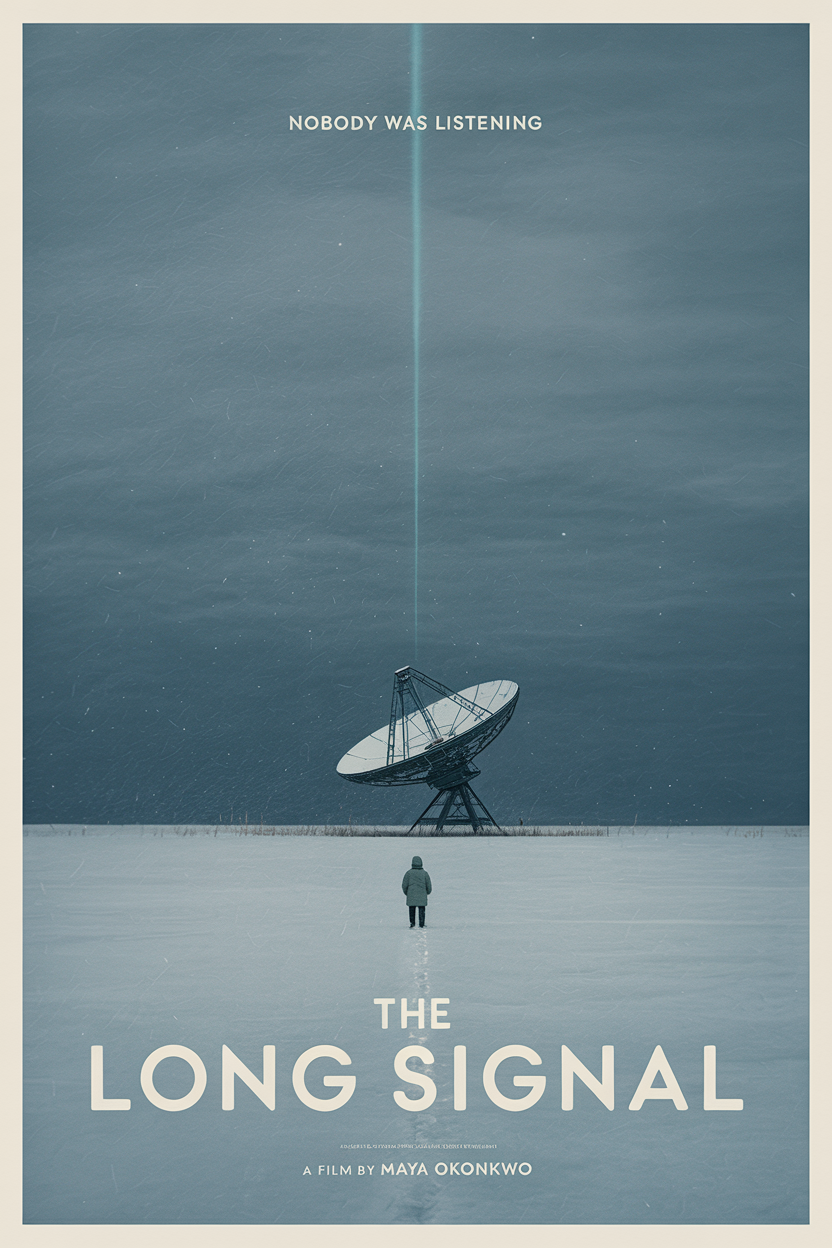
Three of three. THE LONG SIGNAL, NOBODY WAS LISTENING and A FILM BY MAYA OKONKWO all render correctly, and the design is in a different class. Reading the prompt it wrote explains why: it dropped the meta description that caused the garbled kicker, gave the title its own empty band of frozen ground to sit on, and added the sentence "These three lines are the only text."
That call spent 10,971 thinking tokens, took 129.1 seconds and cost $0.71675 against $0.031875 at default. That is 22.5x the price and 12.4x the wall clock. It is also still 72 cents, against an Ideogram render at $0.1125 a go and a designer's afternoon. On a job where the strings have to be exact, paying the thinking tax once beats re-rolling the image five times.
Honest verdict
On exact-string typography across the three still cases, Fable 5.1 landed 11 of 12 required strings and Astra landed 10 of 12. On the two video cases both were correct on structure and both missed their own shot timing by the same margin. That is a narrower gap than the 1.66x price difference, and I would not have predicted it.
Astra is the better default. It is 40% cheaper, it respected the element-count cap where Fable did not, and it wrote a stricter, safer prompt in the product film case. Its weakness is that when it misses on typography it misses badly, and you cannot pay more to make it think harder.
Fable 5.1 earns its premium in exactly one situation, and it is a common one: when specific strings have to appear correctly and a re-roll is expensive. The effort dial is the real product here. Run it at low for volume work where it is barely different from Astra, and reach for max on the hero asset.
The broader point: in every one of these five cases the prompt-writing model was the cheapest component in the pipeline, and the one with the most leverage over whether the output was usable. Most teams are tuning the expensive end.
FAQ
Which is better for prompt writing, Claude Fable 5.1 vs GPT 6 Astra?
Across five use cases they were close: Fable 5.1 got 11 of 12 required strings rendered correctly against Astra's 10 of 12, at 1.66x the cost. Astra is the better default for volume. Fable 5.1 at effort: max is the better choice for hero assets with exact text.
How much does each model cost per prompt?
In this test, Fable 5.1 averaged $0.0307 per prompt at default effort and Astra averaged $0.0185. Published rates are $12.50 and $62.50 per million input and output tokens for Fable 5.1, and $10.50 and $52.50 for Astra.
Does the effort parameter on Claude Fable 5.1 actually help?
Yes, measurably. On the poster case it took the render from two of three exact strings to three of three, for 22.5x the cost and 12.4x the latency of a default call. Worth it on a single hero asset, not on a batch.
Why did the poster text come out misspelled?
Typography in image models degrades with the number and length of text blocks. Both first attempts asked for a title, a tagline and a credits block on one poster. The winning prompt fixed it by stating that those three lines were the only text in the image.
Can I use these models through one API?
Yes, both run on Segmind at api.segmind.com/v1/claude-fable-5.1 and api.segmind.com/v1/gpt-6-astra, alongside the image and video models used here. Note that they return different response envelopes: Astra uses the OpenAI chat.completion shape and Fable 5.1 uses the native Anthropic Messages shape.
Does LTX 2.5 Fast really generate audio?
It returns a real AAC track and bills for it, but in this test both clips measured effectively inaudible, at -52.7 dB and -64.4 dB mean volume. Seedance 2.0 Mini's tracks measured around -23 dB on the same scale.
What I would do tomorrow
Route the batch work to GPT 6 Astra, keep Claude Fable 5.1 on the hero assets with effort turned up, and stop describing the format of the thing you are generating inside the prompt. That last one is free and it fixed the worst failure in this entire test.
Every model here is one API call away on Segmind. The whole experiment came to $3.56: eleven test renders, one featured image and sixteen LLM calls. Five of those sixteen were Fable calls I had to throw away and re-run, because I had written the client against Astra's response envelope and Fable's is a different shape.