
The Cheapest Way to Ship Gemini Omni 1.2 Flash: Segmind vs fal vs Replicate
Gemini Omni 1.2 Flash pricing on Segmind, fal and Replicate, per second and per clip, plus the draft and upscale loop that cuts a 1080p bill.

Google priced Gemini Omni 1.2 Flash at $0.07 per second of 720p video, 30% under Omni 1.1. Most developers never pay that number. You pay whatever your platform charges for it, and on the three places teams usually run it, the gap is real: Segmind, fal and Replicate charge noticeably different amounts for the same Google model, and none of them changes a single frame of what comes back.
I pulled every rate card on November 9, 2026, fired six real generations on Segmind and read the billed cost off each response, then worked out what a finished clip costs on all three. This is the full Gemini Omni 1.2 Flash pricing comparison, plus the part that moves your bill more than the platform does: draft at 360p, and pay for resolution once, on the take you actually keep.
The short answer
| Per second of video | Segmind | fal | Replicate |
|---|---|---|---|
| 360p | $0.025 | $0.0273 | $0.035 |
| 720p | $0.074 | $0.0819 | $0.105 |
| 1080p | $0.111 | $0.1229 | $0.155 |
| 4K | $0.221 | $0.2457 | $0.31 |
| Premium over Segmind | +10 to 11% | +40 to 42% |
Native audio is included on all three. Segmind's column is the video-token rate I measured from billed costs; each request also bills about $0.004 of prompt tokens. fal and Replicate are the flat rates on their model pages.
fal costs 10 to 11% more than Segmind at every resolution. Replicate costs about 40% more. That order holds on every endpoint that generates video: text, image and reference to video, plus upscaling. It does not hold on edits and extends, where fal comes out slightly ahead, and I will show you exactly why below.
How each platform bills
- Segmind passes through Google's token meter: $12.70 per million video output tokens, $1.59 per million input tokens and $9.52 per million text output tokens (the model's thinking). Video output is a fixed number of tokens per second at each resolution, so in practice it is a per-second price with a few tenths of a cent of prompt on top. Every response carries an
x-costheader with the exact amount billed, which is where every Segmind figure in this post comes from. Endpoints: text-to-video, image-to-video, reference-to-video, video edit, extend and upscale. - fal runs the same six jobs as separate endpoints under
google/gemini-omni-flash/v1.2and bills a flat rate per second of output by resolution. On extend it states that the input video is not billed. - Replicate runs it as one model,
google/gemini-omni-1.2-flash, billed per second of output at the target resolution. The inputs you send pick the mode: text, a first frame, first plus last frame, up to six reference images, or a video to edit. There is no separate extend or upscale; its 1080p and 4K outputs are upscaled from the base render inside the same call.
What a clip costs at 720p, 1080p and 4K
| Clip (16:9, audio on) | Segmind | fal | Replicate |
|---|---|---|---|
| 720p, 5 seconds | $0.37 | $0.41 | $0.53 |
| 720p, 10 seconds | $0.74 (billed $0.745) | $0.82 | $1.05 |
| 720p, 15 seconds | $1.12 | $1.23 | $1.58 |
| 1080p, 5 seconds | $0.56 | $0.61 | $0.78 |
| 1080p, 10 seconds | $1.11 | $1.23 | $1.55 |
| 1080p, 15 seconds | $1.66 (billed $1.663) | $1.84 | $2.33 |
| 4K, 5 seconds | $1.11 | $1.23 | $1.55 |
| 4K, 15 seconds | $3.32 | $3.69 | $4.65 |
Billed figures are from the x-cost header on real fires today. The 4K rate is from a 5 second 4K clip I fired on November 5 that billed $1.110. fal and Replicate are rate times seconds, from their own pages.
Per clip, the differences look like cents. They stop looking like cents the moment you count how many clips you throw away before you ship one, which is the whole game with a video model.
The cheapest workflow: draft at 360p, upscale the keeper
Omni's 1080p and 4K are upscales of a base render. Replicate's schema says so outright, and Google's launch post tells you to draft at 360p or 720p and upscale your best take. Segmind and fal both expose that upscaler as its own endpoint, which means you can iterate at 360p prices and pay for resolution once. Here is the whole loop on Segmind, start to finish.
Step 1: a 15 second draft at 360p
Parameters duration: 15 | resolution: 360p | aspect_ratio: 16:9 | seed: 4242
Gemini Omni 1.2 Flash on Segmind, 15 seconds at 360p. Billed $0.376, rendered in 42 seconds.
For 38 cents I can see everything I need to judge: the boat's path, the lamp timing, the banner spelling and the sound beats. Every instruction landed in order, and 'SHIPPED' is spelled right even at 640x360. It is soft, which is fine. Nobody approves a draft on sharpness.
Step 2: upscale the approved draft to 1080p
The same draft through gemini-omni-1.2-flash-upscale at 1080p. Billed $1.103, rendered in 74 seconds.
The control: the same prompt and seed, rendered straight at 1080p
Parameters duration: 15 | resolution: 1080p | aspect_ratio: 16:9 | seed: 4242
Direct 1080p render, same prompt and seed. Billed $1.663, rendered in 107 seconds.
360p draft
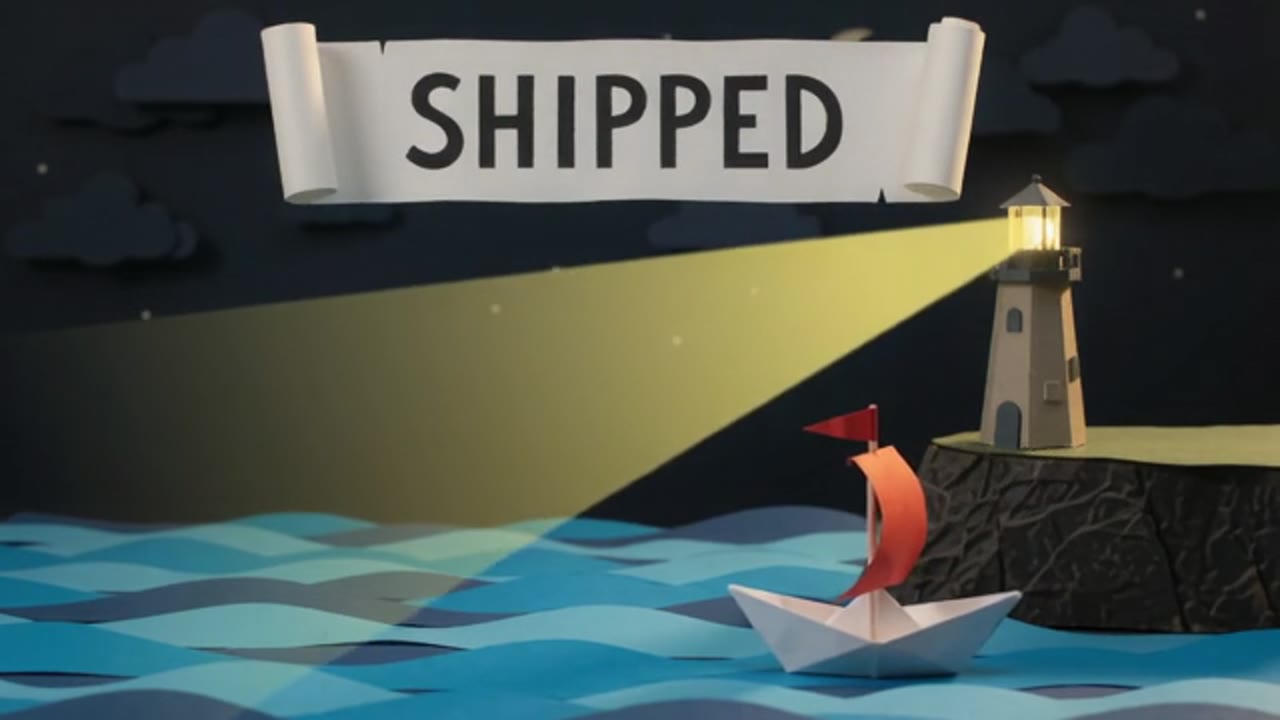
Draft upscaled to 1080p
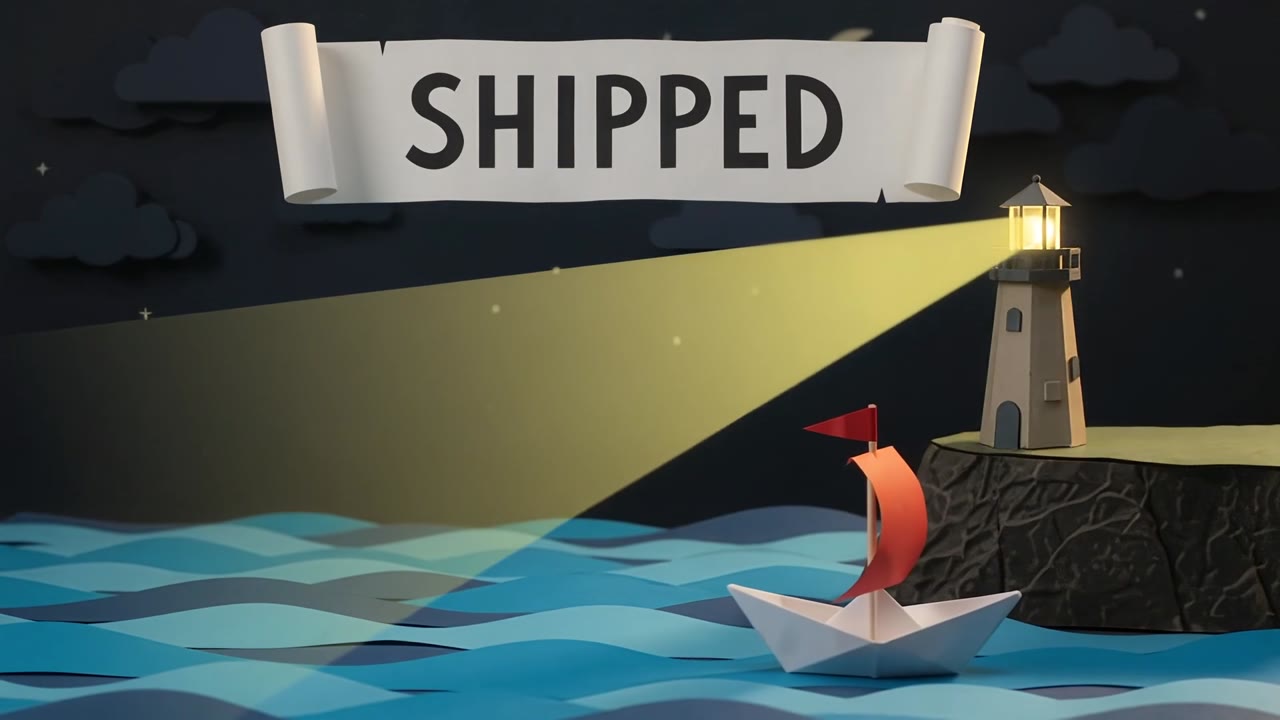
Direct 1080p, same seed
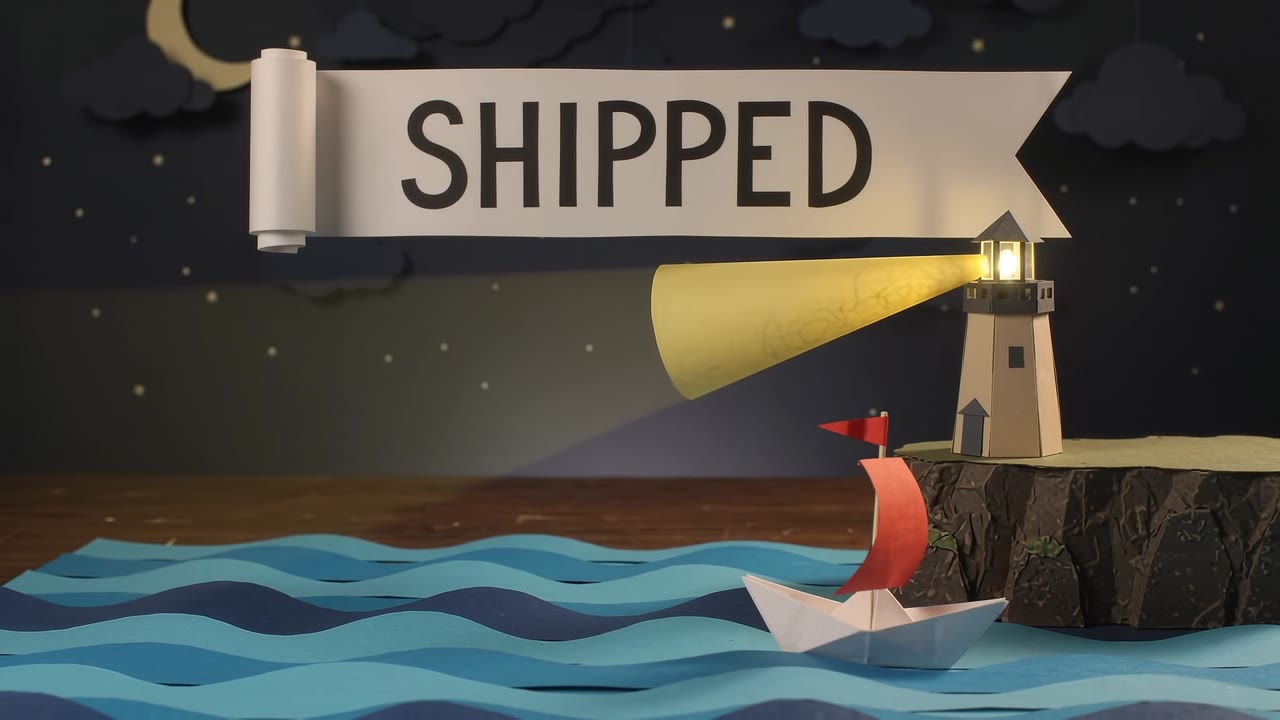
The same moment, 13.5 seconds in. The upscale is the draft. The direct render is a different take.
The upscaled clip is the draft, frame for frame. I compared eight frames across the two clips and every pair matched at 0.999 or better, and the soundtrack came through too (re-encoded, not byte-identical). The direct 1080p render with the same seed started close, 0.78 on the first second, and drifted to a different ending by the last beat (0.50): a different banner shape, a shorter beam, a moon the draft never had.
That matters more than the price. "Re-run the winning seed at a higher resolution" does not give you the take you approved. The upscaler does, and it is also cheaper: $0.376 plus $1.103 is $1.479, against $1.663 for a single direct render. That is 11% less even when your very first draft is the keeper.
What the workflow costs on each platform
Real work is not one draft. Say you are shipping a 15 second 1080p ad and it takes three drafts to get one you approve:
| 15s 1080p ad, three drafts | Segmind | fal | Replicate |
|---|---|---|---|
| Three 360p drafts + upscale the keeper | $2.23 | $2.46 | no upscale endpoint |
| Three 360p drafts + one fresh 1080p render | $2.79 | $3.07 | $3.90 |
| Three direct 1080p renders | $4.99 | $5.53 | $6.98 |
| 100 finished ads a month, cheapest path | $223 | $246 | $390 |
Segmind's draft and upscale are billed figures. The fresh-render row gives you a new take, not the one you approved.
Platform choice is worth about 10% between Segmind and fal. Workflow choice is worth more than half the bill on either of them. On Replicate the cheapest honest path is to draft at 360p and then roll a fresh 1080p render, which costs more than Segmind's full draft-and-upscale loop and still hands you a take you have not seen.
One limit to plan around: the upscaler takes 360p sources to 720p or 1080p only. For 4K, draft at 720p and upscale from there. On Segmind that lands at about $3.37 for 15 seconds against $3.32 for a direct 4K render, so at 4K the upscaler buys you the approved take rather than a discount. On fal the two paths cost exactly the same, $3.69.
Where fal is cheaper: edits and extends
Here is the part a vendor blog usually leaves out. Segmind bills the source video you send to edit and extend as input tokens. fal bills only the seconds it outputs, and says so explicitly for extend. On these two endpoints that flips the order.
Edit: turn the draft into a night scene
Input: the 360p draft from step 1.
Parameters video: the 360p draft | resolution: 360p | seed: 4242
gemini-omni-1.2-flash-video-edit on the 360p draft. Billed $0.420, rendered in 97 seconds.
The edit did what it was told and nothing else. The first nine seconds moved to a starry night (those frames match the draft at only 0.28 to 0.39, because the sky changed), while the boat, lighthouse, cliff and push-in stayed put. The last six seconds were already dark in the draft, so they barely changed (0.94 or better). The banner still reads 'SHIPPED'.
Extend: five more seconds on the draft
Parameters video: the 360p draft | duration: 5
gemini-omni-1.2-flash-extend, 15 second source plus 5 seconds. Billed $0.171, rendered in 58 seconds.
The first 15 seconds are the source, re-encoded. In the new five seconds the beam swings down onto the boat as asked; the bump against the cliff is subtle at best. Now the bill:
| Job | Segmind | fal | Replicate |
|---|---|---|---|
| Edit, 15 seconds, 360p out | $0.420 (billed) | $0.410 | $0.525 |
| Edit, 15 seconds, 720p out | about $1.24 | $1.23 | $1.58 |
| Extend, +5 seconds at 360p | $0.171 (billed) | $0.137 | no extend endpoint |
| Extend, +3 seconds on a 50 second 360p source | $0.107 (billed) | $0.082 | no extend endpoint |
The 720p edit figure is a 15 second edit I fired on November 5. I re-fired the 360p edit and extend on November 10, after Segmind's latest update, and they billed $0.421 and $0.176, within half a cent of the day before. fal and Replicate are rate times output seconds.
fal is about 2% cheaper on a 15 second 360p edit, about 1% at 720p, and 20 to 23% cheaper on extends, where the source video is a large share of a small bill. Segmind does cap that share on long clips: past 30 seconds in total it sends and bills only the source's final 10 seconds, so the input cost stops growing with the length of your footage. If your pipeline is mostly follow-up edits on footage you already have, fal wins those calls. Every generation and upscale call in the same pipeline still costs 10 to 11% more there, so do the arithmetic on your own mix. For the draft, approve, upscale loop above, where you generate several times and edit once, Segmind comes out ahead.
Extend on a long clip
Input: a 50 second 360p clip (the draft, the 20 second extend and the draft again).
Parameters video: 50 second 360p source | duration: 3
gemini-omni-1.2-flash-extend on a 50 second source. Returned 53 seconds as one file. Billed $0.107, rendered in 72 seconds.
The boat drifts out to the right on cue in the last three seconds, and the full 50 second source stays in front of it. Before this update the source plus the new seconds had to fit inside 30 seconds.
Beyond price: what each platform exposes
| Segmind | fal | Replicate | |
|---|---|---|---|
| Separate endpoints | 6 | 6 | 1 model |
| Seed | Yes, reproduces a take | Not in the API schema | Not in the API schema |
| Reference inputs | Up to 10 images + 3 videos, 3 to 15s | Up to 10 images + 3 videos, 3 to 15s | Up to 6 images |
| Extend | +3 to 10s, sources up to 60s | +3 to 10s, any source length | No |
| Upscale endpoint | Yes, to 720p, 1080p or 4K | Yes | No |
| Exact cost per call | x-cost response header | Rate card | Rate card |
Two rows on that table used to favour fal. Segmind's reference endpoint now takes up to three reference videos alongside up to ten images and runs to 15 seconds, and extend now accepts a source of up to 60 seconds. I checked both against the live API rather than the docs: a fourth reference video and a 16 second clip are both refused, and the 50 second extend above came back as one 53 second file. On features the two platforms are now level, except for the seed, which only Segmind exposes.
Reference video: the same boat, a new scene
Input: the 360p draft from step 1, passed in reference_videos.
Parameters reference_videos: the 360p draft | duration: 10 | resolution: 720p | aspect_ratio: 16:9 | seed: 4242
gemini-omni-1.2-flash-reference-to-video with one reference clip. Billed $0.790, rendered in 66 seconds.
The boat carried over from a clip, not a still: the same folds, red sail and red pennant, on the same layered blue paper water, in a canal scene the source never had. It glides in front of the bridge rather than under it, the one instruction it skipped. Of the $0.790, $0.74 is the 10 seconds of 720p output and the rest is the 15 second reference clip plus the prompt. On fal the output alone is $0.82.
The seed is the one I would not give up. On Segmind the same seed and inputs reproduce a take exactly, which is what makes a 360p draft a real preview of what you will upscale, and what lets you regenerate a lost file without paying for a different shot.
What about Google's own API?
Google lists 720p at $0.07 per second. My measured Segmind 720p rate is $0.0745 per second including prompt tokens, about 6% above that. If Omni is the only model you will ever call and you already live inside Google Cloud, Google direct is the floor. The comparison in this post is between the platforms people pick when they want one API key, one bill and one integration across many models, and among those three Segmind is the cheapest way to generate Omni video.
The draft and upscale loop in code
import requests

KEY = "YOUR_SEGMIND_API_KEY"
API = "https://api.segmind.com/v1/"

def run(slug, body, out):
    r = requests.post(API + slug, json=body, headers={"x-api-key": KEY}, timeout=900)
    r.raise_for_status()
    open(out, "wb").write(r.content)
    print(slug, "billed $" + r.headers.get("x-cost", "?"))

# 1. Draft cheaply. Keep the seed so the draft can be reproduced.
run("gemini-omni-1.2-flash-text-to-video",
    {"prompt": "...", "duration": 15, "resolution": "360p",
     "aspect_ratio": "16:9", "seed": 4242},
    "draft.mp4")

# 2. Host the approved draft anywhere public, then upscale that exact take.
run("gemini-omni-1.2-flash-upscale",
    {"video": "https://your-bucket.example.com/draft.mp4", "resolution": "1080p"},
    "final_1080p.mp4")
Both calls are synchronous and return the MP4 directly. For long 4K jobs, use the asynchronous v2 endpoints documented on each model page. Audio cannot be switched off on Omni, so there is nothing to save by disabling it.
FAQ
How much does Gemini Omni 1.2 Flash cost per second?
On Segmind, about $0.025 at 360p, $0.074 at 720p, $0.111 at 1080p and $0.221 at 4K, plus roughly $0.004 of prompt tokens per request. fal charges $0.0273, $0.0819, $0.1229 and $0.2457. Replicate charges $0.035, $0.105, $0.155 and $0.31. Audio is included on all three.
Is Gemini Omni 1.2 Flash cheapest on Segmind, fal or Replicate?
For generating and upscaling video, Segmind: fal is 10 to 11% more and Replicate about 40% more at every resolution. For edits and extends, fal is 1 to 23% cheaper because it does not bill the source video.
Does Segmind support reference videos for Gemini Omni 1.2 Flash?
Yes. Up to three reference clips of 15 seconds or less each, alongside up to ten reference images, for outputs of 3 to 15 seconds. Each clip is billed as input at its own resolution, about $0.003 per second of source at 360p and $0.009 above.
How much does a 15 second 1080p Gemini Omni 1.2 Flash video cost?
Rendered directly: $1.66 on Segmind, $1.84 on fal and $2.33 on Replicate. Drafted at 360p and upscaled on Segmind it billed $1.48, and the result is exactly the take you approved.
Does upscaling change the video?
No. The upscaled 1080p clip matched the 360p draft at 0.999 or better on every frame I checked and kept its soundtrack. Re-rendering at 1080p with the same seed produced a visibly different take.
Can I turn off audio to save money?
No. Omni always generates native audio, and none of the three platforms charges extra for it.
The verdict
The same Google model costs 10% more on fal and 40% more on Replicate than it does on Segmind, and the cheapest way to ship it is not a platform setting at all: draft at 360p, approve a take, and upscale that take. On Segmind that loop cost me $1.48 for a finished 15 second 1080p clip, against $1.66 to render it once blind.
If you live in edits on footage you already have, fal will save you a few cents a call and I will not pretend otherwise. For everything else, run Gemini Omni 1.2 Flash on Segmind: one key, a seed that reproduces your draft, and a receipt on every response.