
Seedance 2.5 Real Estate Video: Every Shot a Listing Needs
Seedance 2.5 real estate video: the four shots every listing needs, the exact API parameters, and what each clip costs from measured generations.

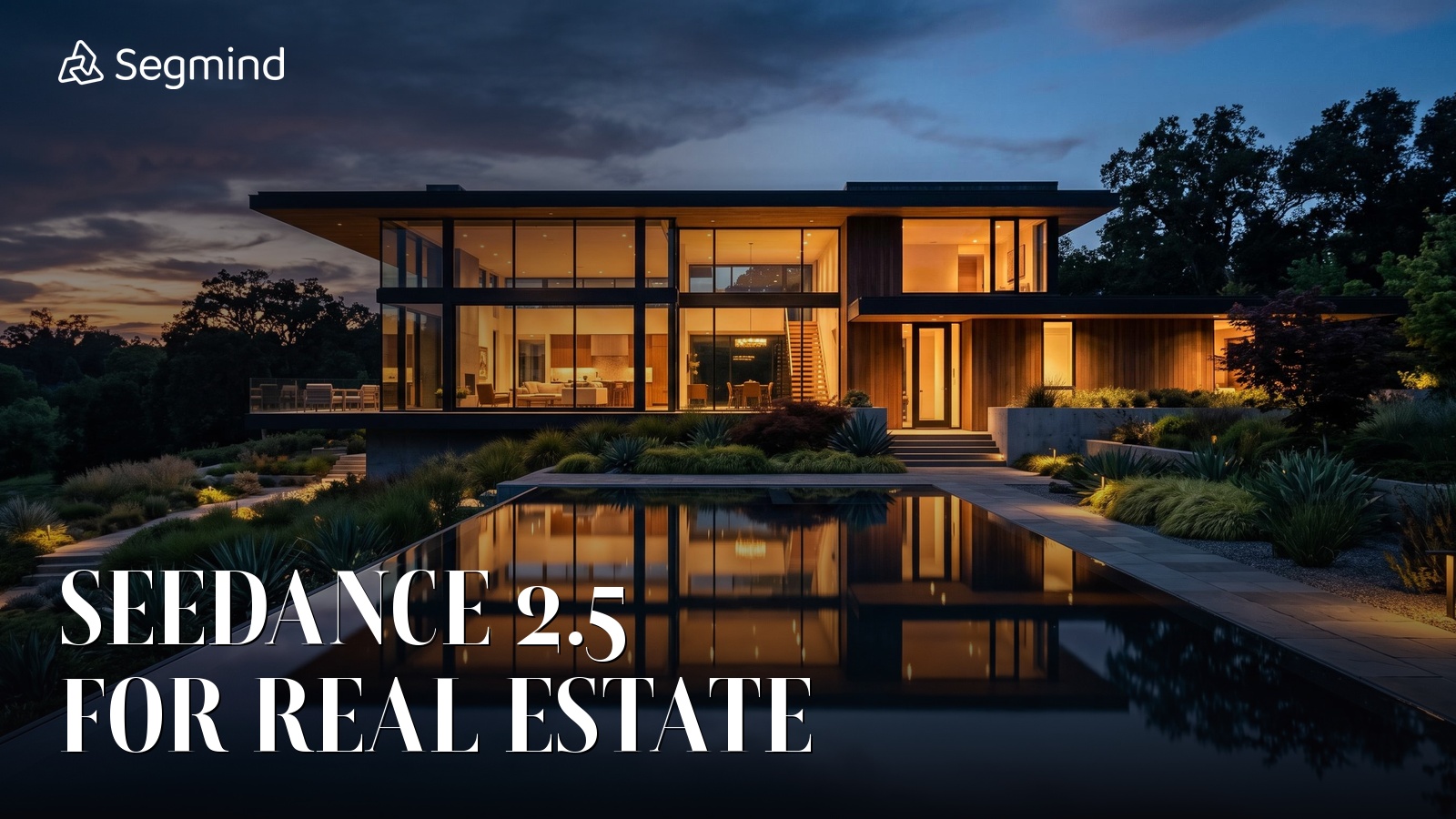
A real estate listing needs moving pictures now, and most agents still do not have them. The photographer comes, shoots twenty stills, and leaves. Video is a separate booking with a separate day rate, which is why the majority of listings on the market go up as a slideshow with a piano track under it.
So I went at the Seedance 2.5 real estate question from the production side: if I had to deliver a complete listing package for a property tomorrow, what exactly would I ask the API for, what would it hand back, and what would it cost per property. Not the marketing answer, the line items.
What follows is the four shot package I would actually commission, the exact parameters for each, the price of every clip length worked out to six decimal places, and the real latency spread from 32 completed generations. I will also be specific about where Seedance 2.5 stops being the right tool for property work, because there is a ceiling and it matters for luxury listings.
What a listing package actually contains
Every property marketing brief I have seen breaks into the same four deliverables, and they are four deliverables because they go to four different places.
The hero exterior is the establishing shot. It opens the listing page and the YouTube walkthrough, it runs 8 to 12 seconds, and it is almost always a rising drone move toward the front of the building at golden hour. The interior walkthrough is the one buyers actually watch to decide whether to book a viewing, it runs 10 to 15 seconds per room grouping, and its whole job is continuity: the space has to feel like one connected floor plan rather than a series of unrelated rooms.
The vertical cut is what sells the property now. It is 9:16, it goes to Instagram Reels and TikTok, and it is a different edit rather than a crop of the landscape one. The amenity and lifestyle shot is the closer for anything with a pool, a terrace or a shared clubhouse, and it is nearly always shot at twilight because warm interior light against a deep blue sky is the single most reliable way to make a building look expensive.
Seedance 2.5 can be pointed at all four. The parameter that decides whether it is genuinely useful for property work, rather than a way to generate houses that do not exist, is first_frame_url.
The shot that matters most: a listing photo, in motion
Generating a beautiful house from a text prompt is a nice demo and completely useless to an agent, because the agent has a specific property to sell. The workflow that matters runs the other way: take a still the photographer already delivered, pass it as the first frame, and ask for motion.
Here is the kind of frame that goes in. I generated this one so the post has a clean, rights-free example to work with, but in production this slot holds the actual MLS photo of the actual listing.
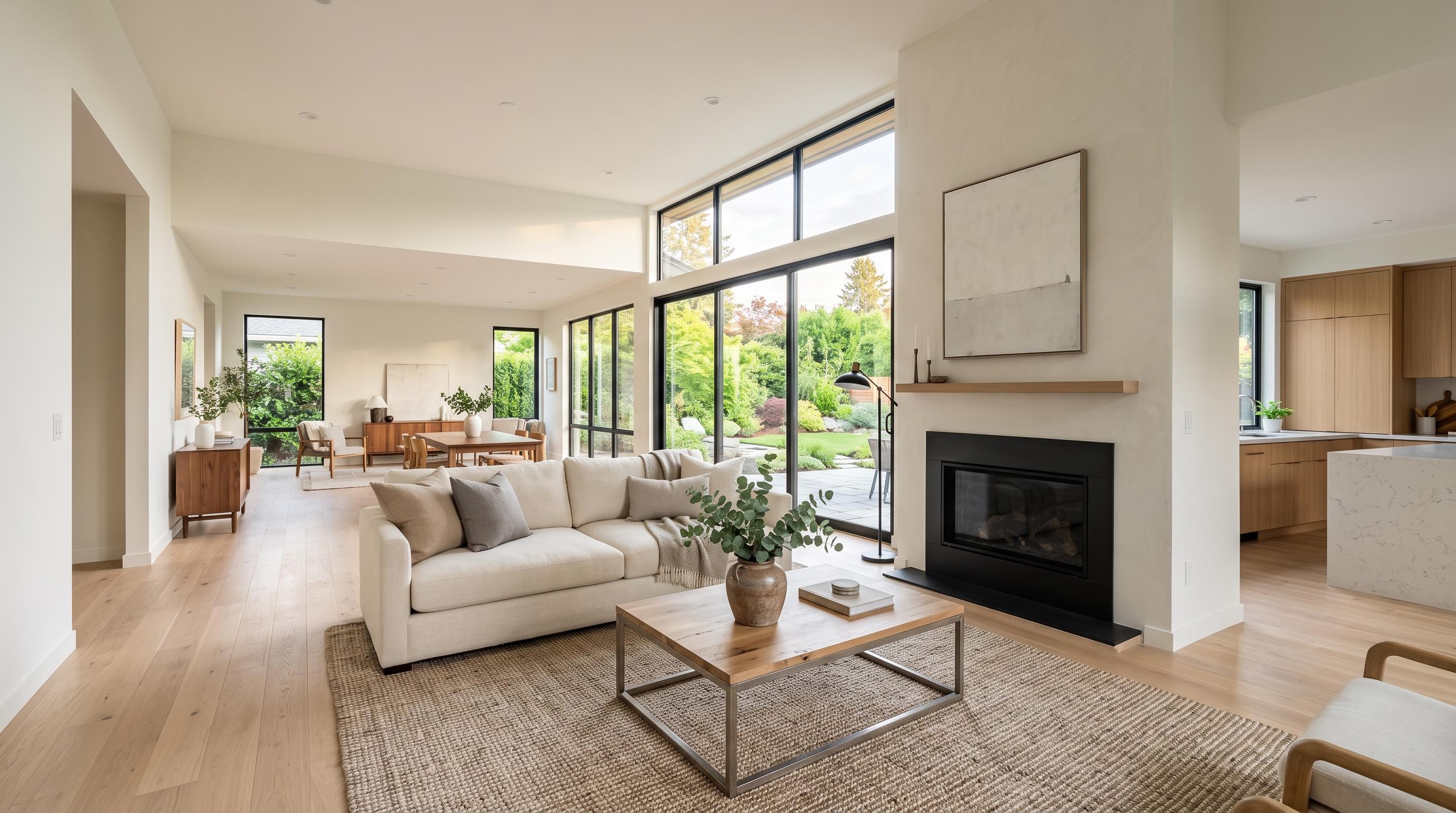
The input side of the workflow: a standard wide interior listing frame, passed to first_frame_url. In production this is the photographer's file, not a generated one.
Parameters first_frame_url: listing photo | duration: 10 | resolution: 720p | aspect_ratio: adaptive | generate_audio: true | bitrate_mode: high
Two things about that parameter block are worth stealing. Use adaptive rather than naming a ratio when you pass a first frame, so the output inherits the photograph's framing instead of being cropped or padded to fit a ratio you declared. And keep the motion vocabulary conservative. Property video has a house style: slow dolly, steady gimbal, no whip pans, no rack focus. Prompts that ask for energetic camera work get you something that reads as a car advert rather than a listing.
first_frame_url and animated. 10s, 720p, adaptive (1284x716), native audio. Billed $2.379393.Shot two: the exterior reveal
The establishing shot is the one case in a listing package where generating from text is legitimate, because a rising drone move over a property is often the shot nobody booked a drone operator for. The realistic use is a stand in while the real aerial is scheduled, or B roll for a development that is not built yet.
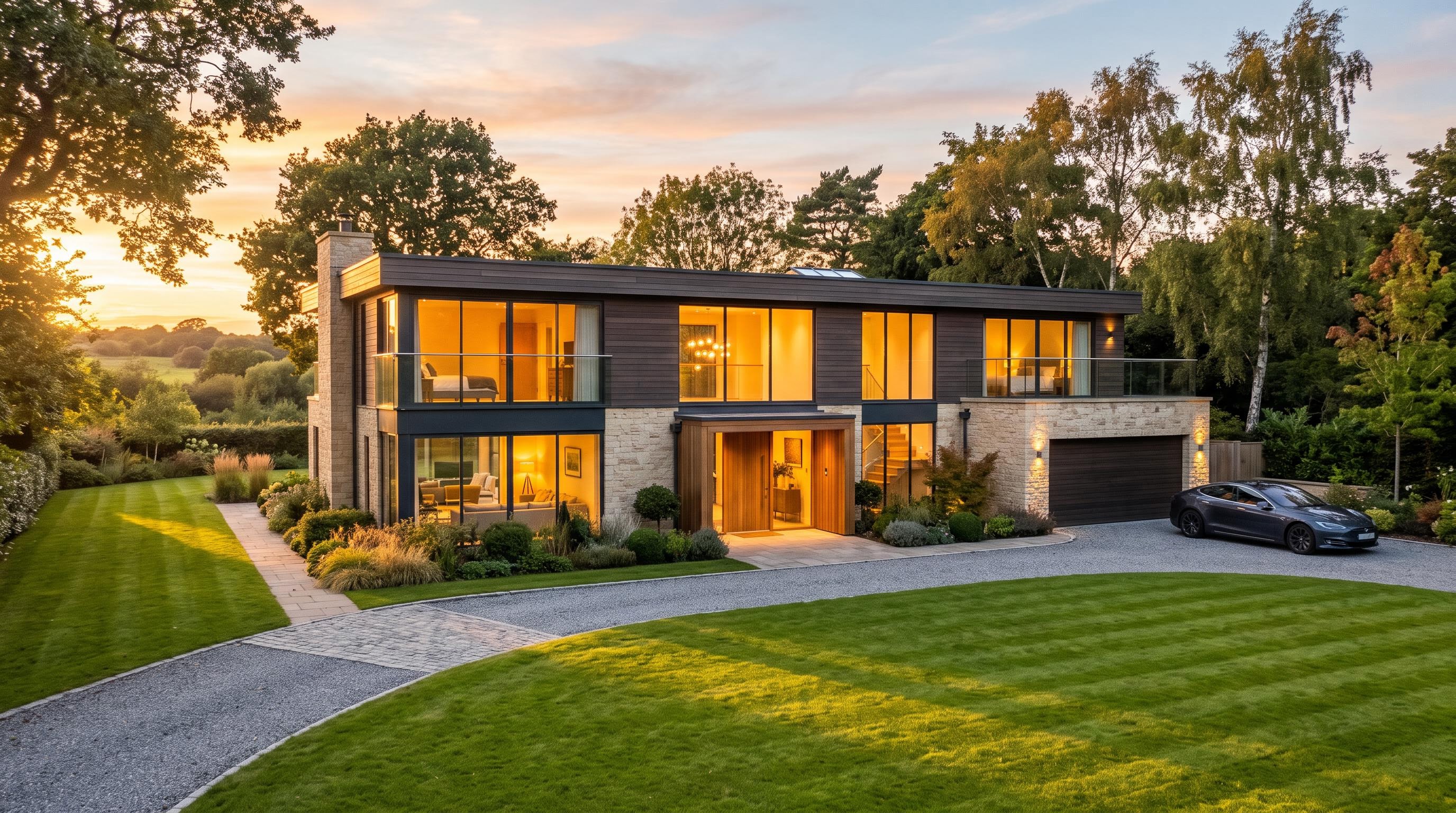
The seed frame for an exterior reveal. Passing this as first_frame_url pins the architecture so the camera move cannot invent a different building.
Parameters first_frame_url: exterior photo | duration: 10 | resolution: 720p | aspect_ratio: adaptive | generate_audio: true | seed: 2042
Set the seed deliberately on this one. If the client comes back wanting the same reveal three seconds longer, a fixed seed with a changed duration gives you a variation on the same look rather than a completely different house. That is the difference between a revision and a reshoot.
Shot three: the vertical cut
Vertical is not a crop. A 16:9 walkthrough squeezed to 9:16 loses the room, and the whole point of the format is that the phone screen is filled by one thing at a time: the island, the doorway, the view. Generate it as its own shot from a seed frame composed vertically, which costs exactly the same as 16:9 because the pixel count is identical. My output came back 716x1284, the exact transpose of the landscape shots.
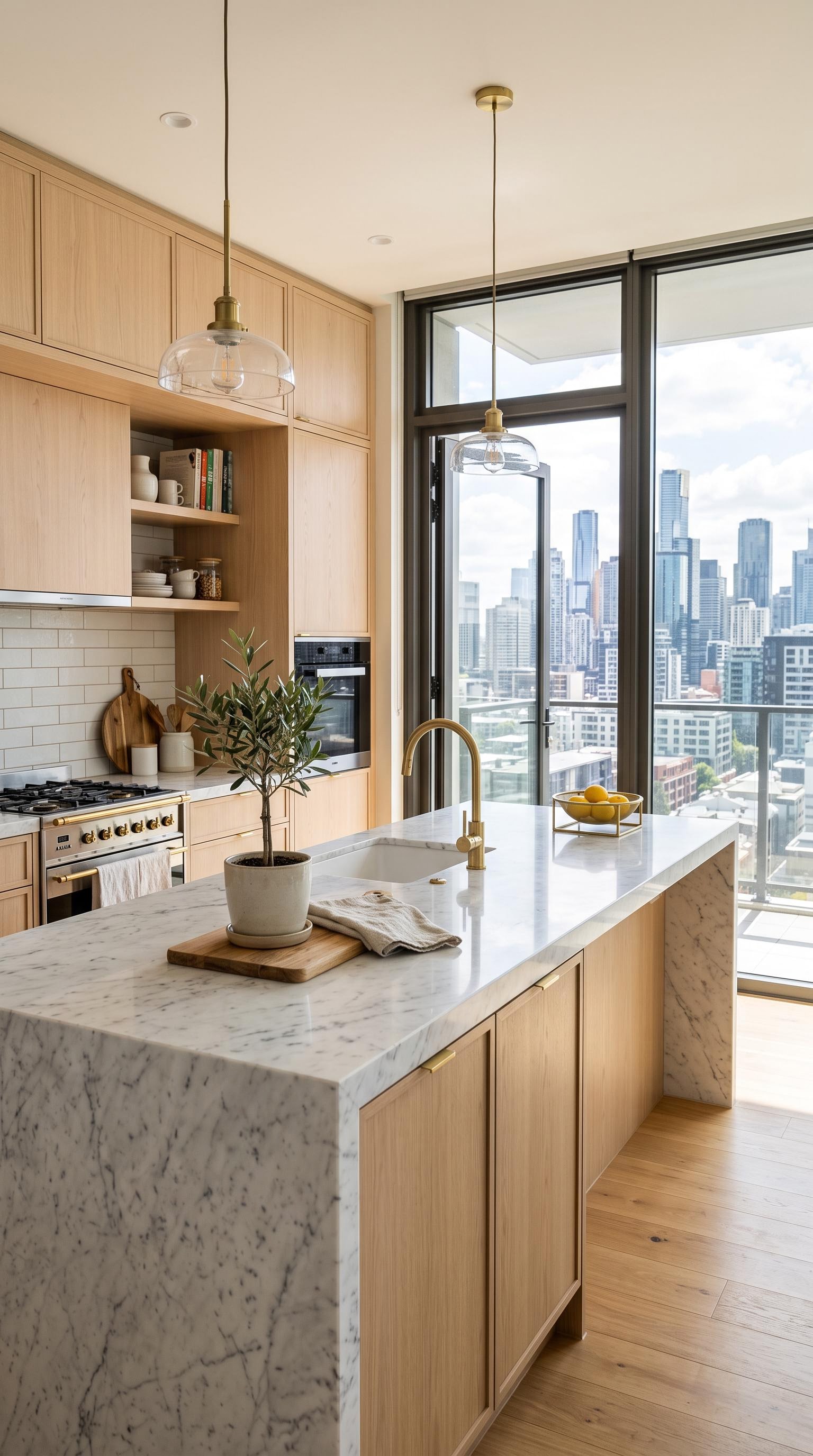
A 9:16 seed frame composed for the format rather than cropped into it.
Parameters first_frame_url: 9:16 seed frame | duration: 10 | resolution: 720p | aspect_ratio: adaptive | generate_audio: true | bitrate_mode: high
Shot four: the twilight amenity sequence
This is the longest clip in the package at 15 seconds, and it is the one that tests whether the model can hold a multi shot sequence together. The brief asks for three beats in one clip: across the pool, up to the terrace, then out to the facade. Anything under about 10 seconds does not give each beat room to land, which is a lesson that carried over from earlier Seedance work where 6 second multi shot prompts failed outright.
Parameters duration: 15 | resolution: 720p | aspect_ratio: 16:9 | generate_audio: true | bitrate_mode: high
One hard lesson on audio, and it cost me an hour. Every one of these four prompts originally ended by asking for "ambient music in the background". The first one rendered for a full seven minutes and then died with OutputAudioSensitiveContentDetected.PolicyViolation, a copyright rejection on the soundtrack the model had just written. Asking Seedance 2.5 for music of any kind points it at the one thing its moderation layer will not clear. Swapping the phrasing to diegetic sound, room tone, birdsong, water, a distant city, and adding an explicit "no music", took all four clips through on the next attempt. Describe what the microphone would have picked up on location, never a score.
What the package costs, to the cent
This is the part I care about most, because property marketing lives or dies on cost per listing, and Seedance 2.5 turns out to be exactly predictable rather than roughly predictable.
Billing is by output tokens at $10.97 per million. Across every completed 720p generation on this account, the token count is described exactly by one line:
tokens = 21600 x duration_in_seconds + 900Every 720p figure below has been matched against a real billed generation on this account.
| Duration | 720p | 480p | Typical listing use |
|---|---|---|---|
| 4s | $0.957681 | $0.425954 | Single room beauty shot |
| 8s | $1.905489 | $0.847553 | Short exterior reveal |
| 10s | $2.379393 | $1.058353 | Hero exterior, vertical reel |
| 15s | $3.564153 | $1.585351 | Interior walkthrough, amenities |
| 20s | $4.748913 | $2.112350 | Extended floor plan tour |
| 30s | $7.118433 | $3.166348 | Full single take listing film |
Seedance 2.5 cost by duration and resolution, derived from the billed token formula and verified against completed generations.
So the four shot package, at 720p, is two 10 second clips and two 15 second clips: $11.8871 per property. Ten listings a month comes to $118.87. Drop the whole package to 480p for social first delivery and it is $5.2874 per property, a flat 55.5% saving at every duration.
Two smaller findings that change how you budget. Audio is free: a 5 second clip with generate_audio off billed $1.200458, and with it on the same configuration lands within a thousandth of a cent of that, so there is no reason to ever turn it off. And aspect ratio is nearly free, with one exception: 9:16 and 4:3 cost the same as 16:9, while 21:9 carries a 0.488% premium at every duration I have measured, which is just its slightly higher pixel count.
How long you wait
Latency is the number I would most caution against putting in a client SLA. Across 29 completed 720p generations, the spread runs from 77.3 seconds to 613.4 seconds with a median of 163.9. Duration barely predicts it. The 10 second clips ranged from 77.3 to 223.5 seconds across seven runs, while the 15 second clips sat at a median of 188.4 across nine. The single slowest job on the account was a 30 second clip at 613.4 seconds, but another 30 second clip with comparable settings came back in 120.5. The four clips in this post landed at 102.1, 164.8, 203.5 and 295.9 seconds, which is the same story: a threefold spread across four jobs at almost identical settings.
Plan on roughly three minutes per clip and build the pipeline to tolerate ten. For a four shot package fired sequentially that is somewhere between six and twenty minutes of wall clock, which is still the same afternoon rather than the same week. Fire the clips one at a time rather than in parallel from a single process, which has been the more reliable pattern in my testing.
Calling it from code
The endpoint is synchronous, so the video comes back as binary in the response body with no polling step to build.
import requests

resp = requests.post(
    "https://api.segmind.com/v1/seedance-2.5",
    headers={"x-api-key": "YOUR_API_KEY"},
    json={
        "prompt": "The camera glides slowly forward through the bright open-plan "
                  "living room toward the floor-to-ceiling windows and the garden "
                  "beyond. Smooth cinematic dolly motion, photorealistic real estate "
                  "cinematography. Quiet natural room tone, faint birdsong, no music.",
        "first_frame_url": "https://your-cdn.com/listing-42-living-room.jpg",
        "duration": 10,
        "resolution": "720p",
        "aspect_ratio": "adaptive",
        "generate_audio": True,
        "bitrate_mode": "high",
    },
    timeout=900,
)

with open("listing-42-living-room.mp4", "wb") as f:
    f.write(resp.content)
Set the client timeout high. The default in most HTTP libraries will abandon a request that the server is still happily working on, and you will be billed for a clip you threw away. The parameters worth knowing are duration, which accepts every integer from 4 to 30, resolution at 480p or 720p, and bitrate_mode, which takes standard or high and does not change the price. Full parameter reference lives on the Seedance 2.5 model page.
Honest assessment
The strong case for property work is the economics and the first frame workflow together. Eleven dollars for a four shot package against a videographer's day rate is not a close comparison, and being able to animate the photographs you already own means the output is about the actual property rather than a plausible invention.
The ceiling is resolution. Seedance 2.5 tops out at 720p, and for a luxury listing going onto a 4K display in an agency window or a developer's sales suite, 720p will not clear the bar. For phone first delivery, portal listing pages and social, it is comfortably enough. That single constraint is the cleanest way to decide whether this belongs in your pipeline.
Two operational notes. Failed generations are free, confirmed again across the failures on this account, all of which billed exactly $0.00, so iterating on a prompt costs only patience. But content moderation rejects on output rather than input, and it screens the audio track separately from the video. Failures on this account have come back as both OutputVideoSensitiveContentDetected and, on the music prompts above, OutputAudioSensitiveContentDetected.PolicyViolation, in each case after the model had already spent minutes rendering. Architecture is unlikely to trip the video screen. The audio screen is the one that will catch you, and it bills nothing but wastes the wall clock. Handle the case rather than assume a 200.
The last one is a billing mechanic that will bite you. The API reserves the model's average cost of $1.90 up front rather than the price of the clip you asked for, so a balance that sits below that floor gets you an HTTP 406 even when the 4 second 480p clip you requested would only cost $0.43. That is exactly what happened on the first attempt at this post: the balance sat at $1.47, every clip bounced before it started, and the four videos above only exist because the account got topped up and the run went again. Keep at least a few dollars of headroom above the reservation floor if you are running a batch unattended.
FAQ
Can Seedance 2.5 be used for real estate video?
Yes, and the most practical route is passing an existing listing photograph as first_frame_url so the clip animates the real property rather than generating an invented one. It covers hero exteriors, interior walkthroughs, vertical social cuts and amenity shots at up to 30 seconds each.
How much does a Seedance 2.5 real estate video cost?
A 10 second 720p clip costs $2.379393 and a 15 second clip costs $3.564153. The four shot package in this post, three 10 second clips and one 15 second clip, comes to $10.702332 per property, or $4.760410 if you deliver at 480p.
What resolution does Seedance 2.5 output?
480p or 720p only. There is no 1080p or 4K option, which is the main limitation for luxury listings destined for large displays. For portal pages, phones and social feeds, 720p is sufficient.
Can I turn an existing listing photo into a video?
Yes. Pass the image URL as first_frame_url and set aspect_ratio to adaptive so the output inherits the photo's framing. Image inputs are free, so this costs the same as generating from text alone.
How long does a Seedance 2.5 generation take?
Across 29 completed 720p runs the median was 163.9 seconds, with a full range of 77.3 to 613.4 seconds. Duration is a weak predictor, so budget around three minutes per clip and design for ten.
Does generating audio cost extra?
No. Enabling generate_audio makes no measurable difference to the bill, since pricing is driven entirely by output video pixels. Leave it on.
The short version
For property marketing, Seedance 2.5 is priced like a line item rather than a project. Under eleven dollars gets a four shot package, the first frame parameter keeps the output tied to the real listing, audio is included, and failures cost nothing while you iterate. The one thing to check before committing is whether 720p clears your delivery bar, because that ceiling is fixed and everything else here is flexible.
The parameter reference and a playground to try a single shot before you wire up a pipeline are both on the Seedance 2.5 page.