
Seedance 2.5 Native 4K is here: API and Pricing - All you need to know
Seedance 2.5 4K generates native 3840x2160 video on Segmind for $5.12 per 5s clip. Exact pricing, the async API and 5 real tests vs upscaled 4K.

Until now, there was exactly one way to get a Seedance 2.5 clip in 4K on Segmind: render it at 1080p and let an upscaler stretch it to 3840x2160. That is no longer true. Seedance 2.5 4K is live as its own model, seedance-2.5-4k, and it generates every frame at 3840x2160 instead of enlarging a smaller one.
I put $23 of credits through it this morning: five native 4K renders across landscape, vertical, image-to-video and a wide establishing shot, plus the same prompt and seed through the upscaled route so you can see the difference at 100%. Below is the exact pricing formula (it matched every bill to the cent), the API call, the one codec setting that will trip you up, and where native 4K is worth paying for and where it is not.
What Seedance 2.5 4K actually is
It is ByteDance Seed's Seedance 2.5 video model, run at its native 4K tier. You get the same feature set as the regular model: text-to-video, image-to-video from a first frame, first-to-last-frame transitions, up to 30 reference images, 10 reference videos and 10 reference audio clips cited as @Image 1, @Video 1 and @Audio 1, synchronized audio generated in the same pass, and clips from 4 to 30 seconds.
Three things are different from seedance-2.5:
- One resolution only. The
resolutionenum has a single value,4k. For 480p, 720p or 1080p you stay onseedance-2.5. - Async only. A synchronous call to
/v1/seedance-2.5-4kis refused with an HTTP 400 that tells you to usePOST /v2/seedance-2.5-4kand poll. More on that in the API section. - A much lower token rate. $5.222217 per million tokens, against $12.315771 for Seedance 2.5 at 1080p. You pay for four times the pixels, but each pixel costs less than half as much.
Seedance 2.5 4K specs at a glance
| Spec | Seedance 2.5 4K |
|---|---|
| Model slug | seedance-2.5-4k |
| Output | 3840x2160 (16:9), 2160x3840 (9:16), 24 fps |
| Duration | 4 to 30 seconds, or -1 for edits |
| Inputs | Text, first frame, last frame, up to 30 images, 10 videos, 10 audio clips |
| Audio | Generated in the same pass, on by default, free |
| Default codec | 10-bit HEVC (H.265); output_codec: h264 for browsers |
| API | Async only: POST /v2/seedance-2.5-4k, then poll |
| Render time in my tests | 144s to 305s for 4 and 5 second clips |
Seedance 2.5 4K pricing, worked out exactly
Seedance bills on video tokens, and the formula is public on the model page:
tokens = width x height x frames / 1024, where frames = 24 x seconds + 1
At 3840x2160 that is 8,100 tokens per frame. A 5 second clip is 121 frames, so 980,100 tokens, so $5.1183 at $5.222217 per million. My first render billed $5.1182948817. Not close: identical. The extra frame is real and you pay for it, which is why every clip costs a hair more than its seconds alone suggest.
Aspect ratio barely matters, because the price follows the pixel count. My 9:16 vertical billed exactly the same $5.1183 as the 16:9 clip, since 2160x3840 is the same canvas turned on its side. My image-to-video run used adaptive, came back at 3854x2152, and billed $5.1179: those 1,792 fewer pixels per frame, to the token.
| Duration | Text or image to video, 16:9 | Per second |
|---|---|---|
| 4s | $4.10 | $1.026 |
| 5s | $5.12 | $1.024 |
| 8s | $8.16 | $1.020 |
| 10s | $10.19 | $1.019 |
| 15s | $15.27 | $1.018 |
| 30s | $30.50 | $1.017 |
One caution if you budget off the model page. Its examples table lists 10 seconds at $10.23 and 30 seconds at $30.70, which is the 5 second price scaled up in a straight line. That re-charges the extra frame once per five seconds. The token formula, which matched every one of my bills, comes out a little lower at longer durations. Use the formula.
Reference videos are billed on top, at the lower video-input rate of $3.222219 per million tokens, for their full length and counted at 4K regardless of the reference's own resolution. A 5 second output driven by a 5 second reference clip is listed at $6.32.
How it compares to every other way to get Seedance in 4K or near it
| Route | 5s, 16:9 | 10s | 30s | What you get |
|---|---|---|---|---|
| Seedance 2.5 4K (native) | $5.12 | $10.19 | $30.50 | Generated at 3840x2160 |
| Seedance 2.5 Upscaled, 4K | $3.29 | $6.56 | $19.63 | Rendered at 1080p, upscaled |
| Seedance 2.5, 1080p | $3.02 | $6.01 | $17.98 | Native 1920x1080 |
| Seedance 2.0, 4K | $4.13 | $8.22 | not offered (15s max) | Native 4K, older model |
Read that table two ways. Per clip, native 4K is the most expensive Seedance option: 55% more than the upscaled 4K route and 24% more than Seedance 2.0 at 4K. Per pixel, it is the cheapest Seedance 2.5 output there is: four times the pixels of native 1080p for 1.70 times the price. If you were already paying for native 1080p and upscaling it yourself, this is the better deal.
Test 1: macro detail, the case 4K exists for
I started with the shot that should reward native resolution most: a watch movement in macro, with gear teeth, jewel bearings, brushed metal and a small paper tag carrying real text.
Parametersmodel: seedance-2.5-4k | duration: 5 | resolution: 4k | aspect_ratio: 16:9 | seed: 418 | output_codec: h264 | billed: $5.1183
Seedance 2.5 4K, native 3840x2160, 5 seconds, rendered in 162 seconds.
This is the best Seedance footage I have seen on a texture shot. Every tooth on the brass wheel is separate, the perlage on the plate has real grain, the jewels sit in their chatons with a believable bevel, and the push-in holds focus through the whole move. The tag reads "No. 418", correctly spelled, with visible paper fibre and ink spread at full size. The audio is what I asked for and nothing else: a quiet tick and a small metallic click, no music bed.
It did not follow the prompt perfectly. I described a loupe resting on the leather. The model turned it into a glowing brass lamp held above the work, which looks good and is wrong. Props you mention once are suggestions, not instructions.
Test 2: native 4K vs upscaled 4K, same prompt, same seed
Then I sent the identical request, seed included, to seedance-2.5-upscaled at its 4K tier. Both files are 3840x2160 H.264. Only one of them was born that size.
Parametersmodel: seedance-2.5-upscaled | duration: 5 | resolution: 4k (rendered at 1080p) | aspect_ratio: 16:9 | seed: 418 | billed: $3.2931
Seedance 2.5 Upscaled at 4K: rendered at 1080p, upscaled to 3840x2160, 293 seconds.
First surprise: it is a different shot. Same seed, same words, and the camera sits higher, the movement is smaller in frame, the plate is gilt instead of rhodium. I correlated frames from the two clips and they barely agree (0.13 to 0.23 on a 0 to 1 scale). A seed does not carry across these two slugs, so you cannot draft on the cheap route and expect the native render to match it.
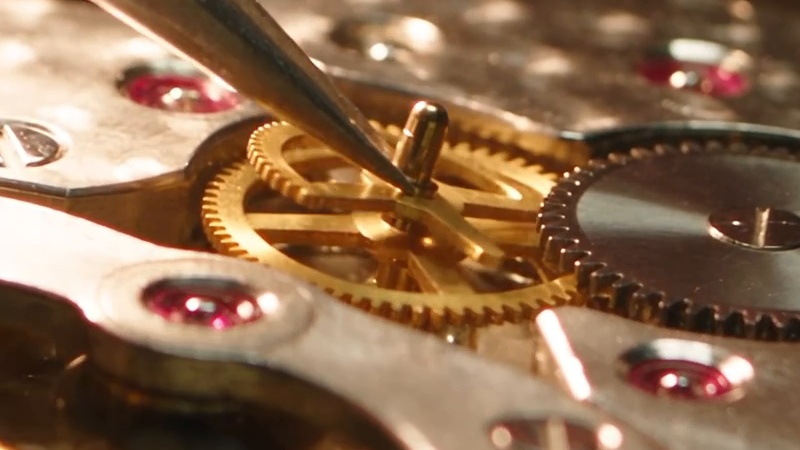
Second: at 100%, the difference is visible.
Native 4K
Upscaled 4K
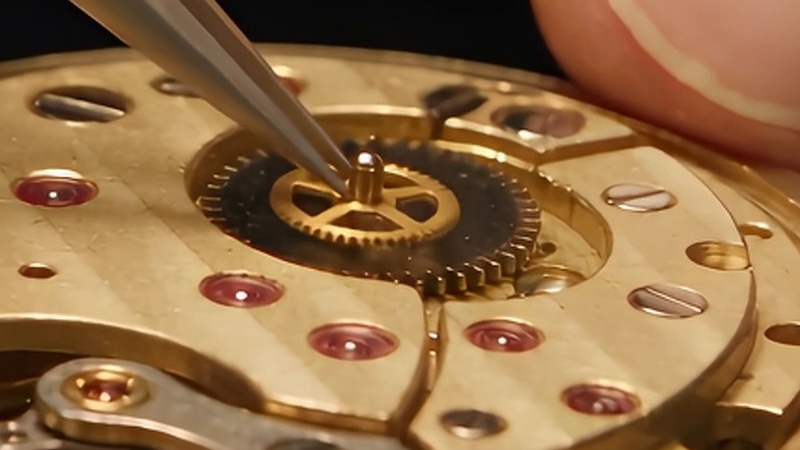
800x450 crops at 100% from the same moment (2.5s) of each clip. The framing differs because the takes differ.
The upscaled crop is not soft. If anything it has crisper edges, and an edge-contrast measure scores it higher. But the crispness is the upscaler's: flat surfaces go smooth and slightly waxy, small screw slots read as drawn rather than machined, and the brushed finish turns into tidy stripes. The native crop has less edge snap and far more texture: the frosted plate, the specular glints on each tooth, the falloff of the depth of field. If your footage will be graded, cropped or shown on a large screen, that texture is what you are paying the extra $1.83 for.
And at normal viewing size? On a laptop screen, most people will not pick one over the other. That is the honest summary, and it is why the upscaled route still has a place.
One thing I did not expect: the native render was faster. 162 seconds for native 4K against 293 for the upscaled clip, which has to finish a 1080p render and then upscale it. Across my four native renders the range was 144 to 305 seconds.
Test 3: vertical 4K for social, in the default codec
Next, 9:16 with fast motion, fire, steam and hundreds of thin noodles: the kind of footage that falls apart at low resolution. I left output_codec on its default to see what you get if you do not think about it.
Parametersmodel: seedance-2.5-4k | duration: 5 | resolution: 4k | aspect_ratio: 9:16 | seed: 77 | output_codec: auto (default) | billed: $5.1183
2160x3840 vertical. Delivered as 10-bit HEVC; re-encoded to H.264 by me so it plays here.
The flames are the best part: blue cones with orange tips that flicker like gas, not like a looping sprite. The noodles hold as individual strands even mid-toss, the prawns keep their shape, and the bamboo steamers and steel strainer behind stay put while the wok moves. The sound is loud and on cue, with the sizzle peaking as the wok tips. As in Test 1, it took liberties: I asked for the cook's hands, and the frame never shows them. The wok and ladle move on their own.
The default file is HEVC Main 10, 10-bit 4:2:0. That is good news for an editor, who gets real grading headroom. It is bad news for a web page: depending on the browser and the machine's hardware decoder, it often will not play at all. The 5 second file was 9.7 MB. Re-encoding it to H.264 myself took almost two minutes of CPU on a small cloud server and produced a 17 MB file. If you want a web-ready file, ask for output_codec: h264 up front and let Segmind do that work.
Test 4: image-to-video from a 4K product still
Most commercial work starts from an approved frame, not a prompt. I generated a no-text product still with Nano Banana 2 at 4K and passed it as first_frame_url, with aspect_ratio set to adaptive, which this mode requires.
First frame
first_frame_url

Input still, generated with Nano Banana 2 at 4K (5504x3072), passed as first_frame_url.
Parametersmodel: seedance-2.5-4k | duration: 5 | resolution: 4k | aspect_ratio: adaptive | first_frame_url: (above) | seed: 1116 | billed: $5.1179
Image-to-video at native 4K. Output came back at 3854x2152 to follow the input's shape.
The good: the first frame is honoured exactly, the glaze, the paper filter and the walnut grain stay put, the grounds swell and darken as the water lands, and coffee drips into the carafe in the last second. The slow push-in is smooth and the window light never flickers.
The bad, and it matters for product work: instead of lifting the kettle that is already on the counter, the model brought a second copper kettle in from the top of frame. Both are visible from the two second mark, and nobody is holding the new one. If continuity of a specific object matters, say so in the prompt ("the kettle on the left is lifted and poured") or check every take before it ships.
Test 5: a wide shot full of small things
Macro shots flatter any model because the subject fills the frame. The harder test for resolution is the opposite: a wide establishing shot where people, boats and crates are each a few hundred pixels tall. This is where 1080p turns figures into smudges.
Parametersmodel: seedance-2.5-4k | duration: 4 | resolution: 4k | aspect_ratio: 16:9 | seed: 7 | output_codec: h264 | billed: $4.1031
4 seconds at native 4K, rendered in 144 seconds.
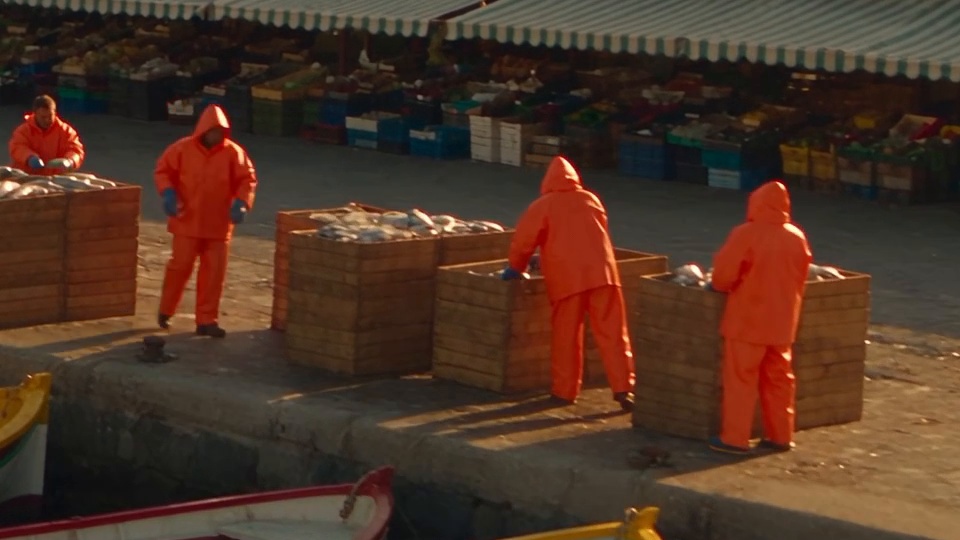
Fishermen, 100% crop
Boat hulls, 100% crop

960x540 crops at 100% from the 2 second mark. Each fisherman is roughly 200 pixels tall.
At 100%, each fisherman is a complete person: hood, gloves, creases in the oilskin, a shadow that matches the low sun. The fish in the crates read as fish. Produce crates under the awnings each have their own colour. Gulls cross the sky with proper wingbeats and the water reflects every hull. The 4 second clip billed $4.1031, exactly the formula's figure.
Look at the hulls, though. I asked for painted hulls and the model added names, and the names are nonsense lettering. That is the general rule for video models: text you put in quotes renders (Test 1's "No. 418" was perfect), and text the model invents for itself comes out as plausible-looking gibberish. At 4K that gibberish is sharp enough to read, which makes it more noticeable, not less. If a shot has signage or hull names, specify them or prompt them away.
How to call the Seedance 2.5 4K API
Because 4K renders take minutes, this model only runs on the async API. You submit, you get a request_id and two URLs back, you poll the status URL, and you fetch the result when it says COMPLETED. The completed status also carries the exact billed cost in metrics.cost, which is the cleanest way I know to keep a spend log.
import time, requests

API_KEY = "YOUR_SEGMIND_API_KEY"
HEADERS = {"x-api-key": API_KEY}

job = requests.post(
    "https://api.segmind.com/v2/seedance-2.5-4k",
    headers=HEADERS,
    json={
        "prompt": "A watchmaker's hands seat a tiny brass gear into an open "
                  "pocket-watch movement. Slow push-in macro shot. Quiet ticking, no music.",
        "duration": 5,
        "resolution": "4k",
        "aspect_ratio": "16:9",
        "generate_audio": True,
        "seed": 418,
        "output_codec": "h264",   # omit for 10-bit HEVC
    },
).json()

while True:
    status = requests.get(job["status_url"], headers=HEADERS).json()
    if status["status"] in ("COMPLETED", "FAILED"):
        break
    time.sleep(15)

result = requests.get(job["response_url"], headers=HEADERS).json()
print("cost:", status["metrics"]["cost"])
print("video:", result["output"])
Three practical notes from running it:
- Validation happens late. The v2 endpoint accepts the submit and only reports a bad parameter when you poll, so check the status for
FAILEDrather than trusting the submit's 200. - Keep headroom in your balance. When a job starts, Segmind holds credits sized from the model's recent average cost (listed at $11.36 per run on the model page), then settles to the real price when it finishes. A balance that covers the clip but not the hold can be refused.
- Failed or moderated renders are not charged.
Which Seedance 4K route should you use?
- Final delivery for big screens, grading or heavy cropping: Seedance 2.5 4K. The texture is generated, not inferred, and you get 10-bit HEVC by default.
- Web and social delivery where 4K is a checkbox: Seedance 2.5 Upscaled at 4K. It is 36% cheaper per clip and most viewers will not see the difference at phone or laptop size.
- Clips longer than 15 seconds in 4K: Seedance 2.5 4K. Seedance 2.0 stops at 15 seconds.
- Cheapest native 4K, short clips: Seedance 2.0 at 4K, at $4.13 for 5 seconds, if you can live with the older model's motion and prompt following.
- Iterating on a prompt: none of the above. Draft on
seedance-2.5at 480p for about $0.55 a clip and only render 4K once the wording works. Expect the 4K take to differ from the draft: it is a different model, so a seed will not reproduce the shot.
Honest assessment
Native 4K is a real step up, not a marketing tier. On fine texture it beats the upscaled route visibly at 100%, the native watchmaker clip even rendered faster than its upscaled twin, and the pricing is fully predictable from a public formula. Per pixel it is the best value in the Seedance 2.5 family.
What 4K does not do is fix prompt following. In three of my five clips the model swapped, dropped or duplicated an object I named: a loupe became a lamp, the cook's hands never appeared, a second kettle arrived from nowhere. In a fourth it painted invented lettering onto the boats. At $5 a take those misses cost real money, which is the strongest argument for drafting cheap and rendering 4K last. And remember the codec: the default HEVC file is right for an edit suite and wrong for a web page.
FAQ
Is Seedance 2.5 4K true native 4K or upscaled?
Native. seedance-2.5-4k generates at 3840x2160. The separate seedance-2.5-upscaled model offers a 4K tier that renders at 1080p and upscales it. Both exist on Segmind; they are different models at different prices.
How much does Seedance 2.5 4K cost?
$5.222217 per million video tokens, which works out to $4.10 for 4 seconds, $5.12 for 5 seconds, $10.19 for 10 seconds and $30.50 for 30 seconds at 16:9. The price follows pixel count, so 9:16 costs the same as 16:9. Audio is free.
Why does the Seedance 2.5 4K API return a 400 on /v1?
The model is async only. Submit to POST https://api.segmind.com/v2/seedance-2.5-4k, poll the status_url until it reads COMPLETED, then fetch the response_url for the video URL.
Why won't my Seedance 2.5 4K video play in the browser?
The default output is 10-bit HEVC, which many browsers cannot decode. Set output_codec to h264 for an 8-bit H.264 file that plays everywhere.
How long does a Seedance 2.5 4K render take?
My 4 and 5 second clips took 144 to 305 seconds. The model page lists a 30 day average of about 271 seconds. Poll every 15 seconds or so.
Can I reuse a seed from a 480p or upscaled draft in Seedance 2.5 4K?
Not to reproduce the same shot. The same prompt and seed gave a visibly different take on the upscaled and native 4K models. Drafts are for testing wording, not for locking composition.
Conclusion
Seedance 2.5 4K is what the upscaled route was standing in for: every frame generated at 3840x2160, up to 30 seconds, with sound, at a price you can calculate before you submit. Use it for the shots that will be seen big. Keep the upscaled tier for everything that just needs a 4K file. You can try it on the Seedance 2.5 4K model page, and the full parameter list is in its API spec.