
Seedream 5.0 Lite vs Nano Banana 2: A Visual Comparison Across Real Use Cases
I ran the same prompts through Seedream 5.0 Lite and Nano Banana 2 across fashion, product photography, typography, and creative scenes. Here is what the outputs actually look like, side by side.

Two models are defining what "production-ready" means for AI image generation in 2026: ByteDance's Seedream 5.0 Lite and Google's Nano Banana 2 (Gemini 3.1 Flash Image). I've tested both extensively via the Segmind API, running the same prompts through each model across real creative workflows.
The short version: they are genuinely different tools with different strengths. Choosing between them depends on what you are actually trying to make. Here is what the outputs actually look like, side by side.
The Models
Seedream 5.0 Lite is ByteDance's February 2026 release, built on a multimodal transformer with live web retrieval and an intent-aware inference pipeline. It is optimized for throughput, batch generation, and creative flexibility. At $0.035 per image via the Segmind API, it is one of the most cost-efficient options at 2K resolution.
Nano Banana 2 is Google DeepMind's Gemini 3.1 Flash Image, a 1.8B parameter model built with Dynamic Quantization-Aware Training for low-latency inference. Its architecture includes a multi-stage reasoning loop that validates spatial and physical constraints before rendering. At $0.077 per image via the Segmind API, it skews slightly more expensive but offers native 4K synthesis and 92%+ text rendering accuracy.
All images below were generated via the Segmind API with identical prompts and default settings for each model. No post-processing.
Use Case 1: Fashion and Editorial Portraits
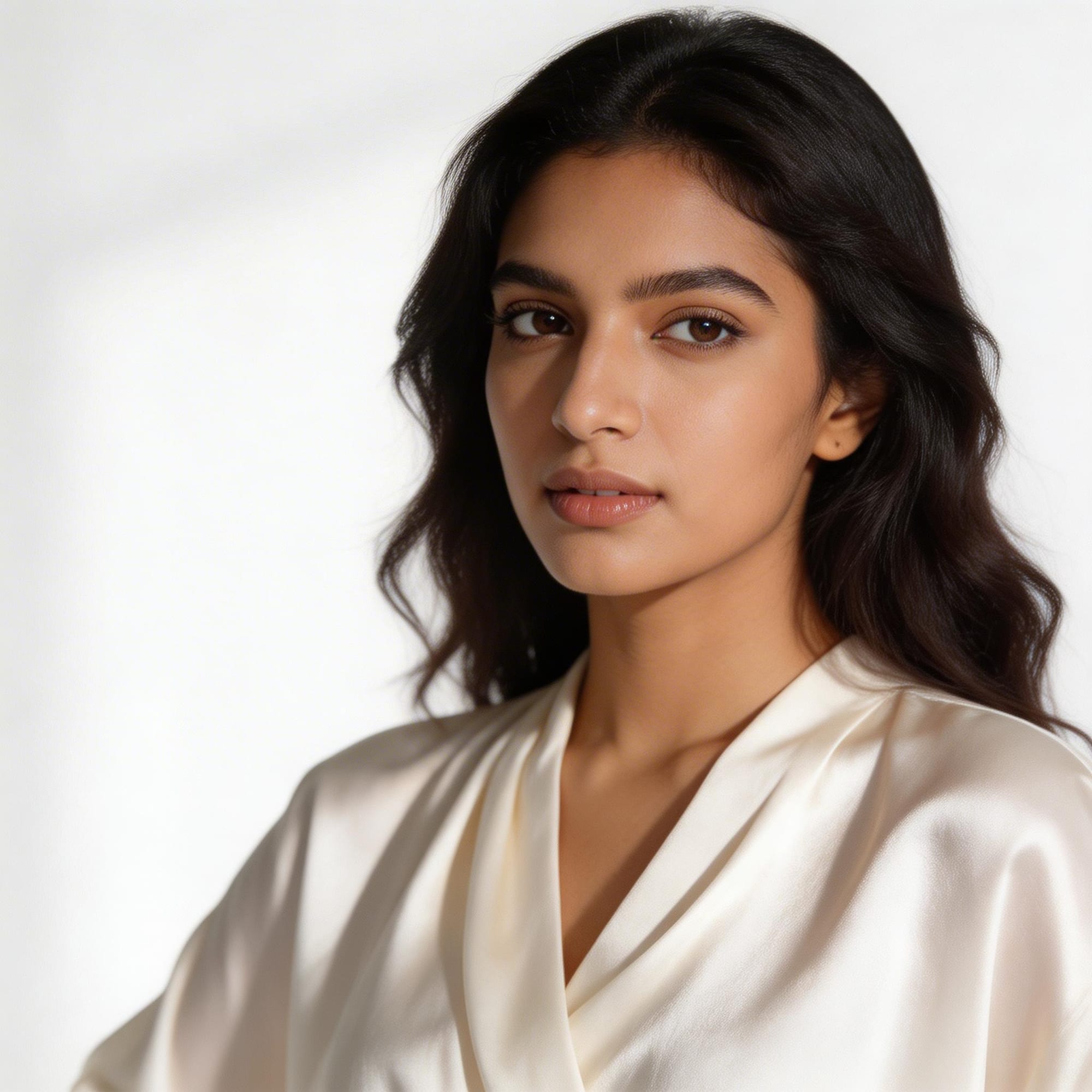
Fashion and beauty photography is one of the first things people reach for when they want to benchmark a model. Both models handle it well, but the aesthetic choices are noticeably different.
Seedream 5.0 Lite

Nano Banana 2
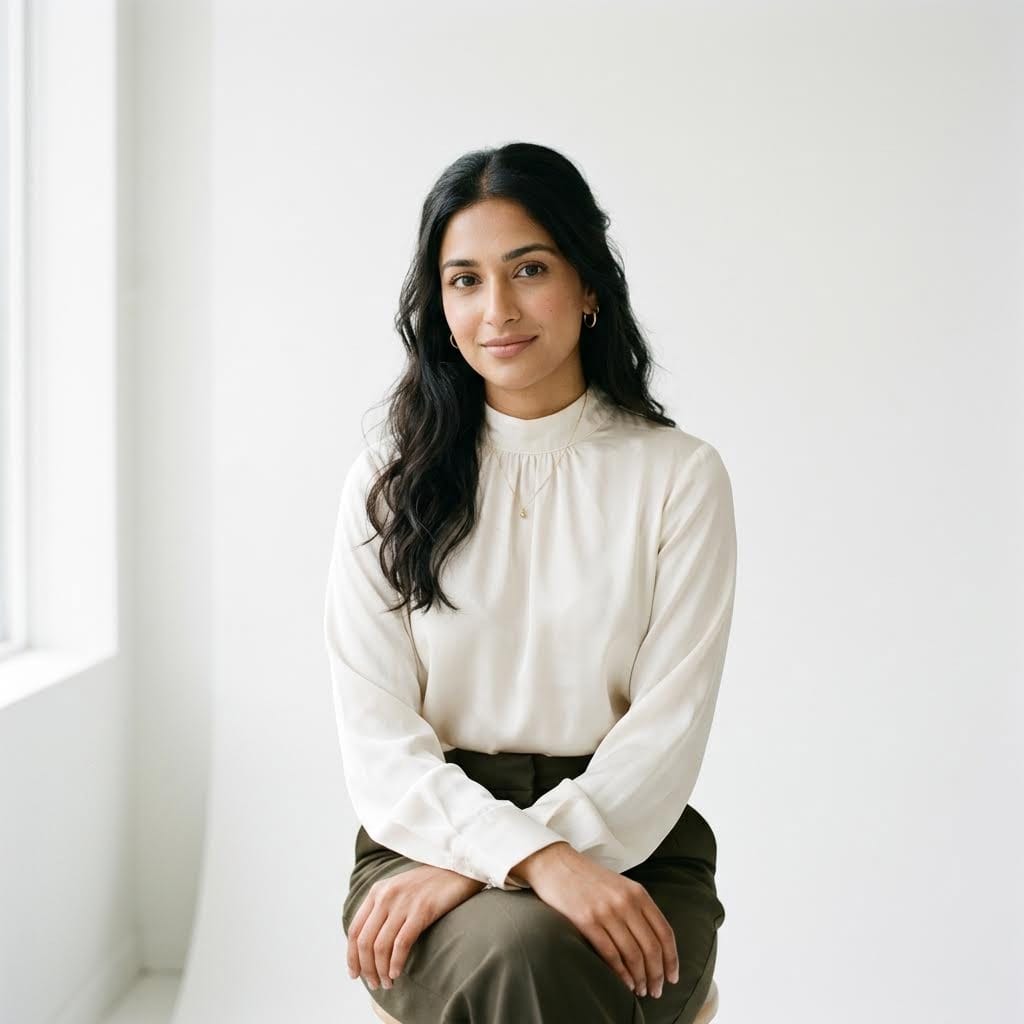
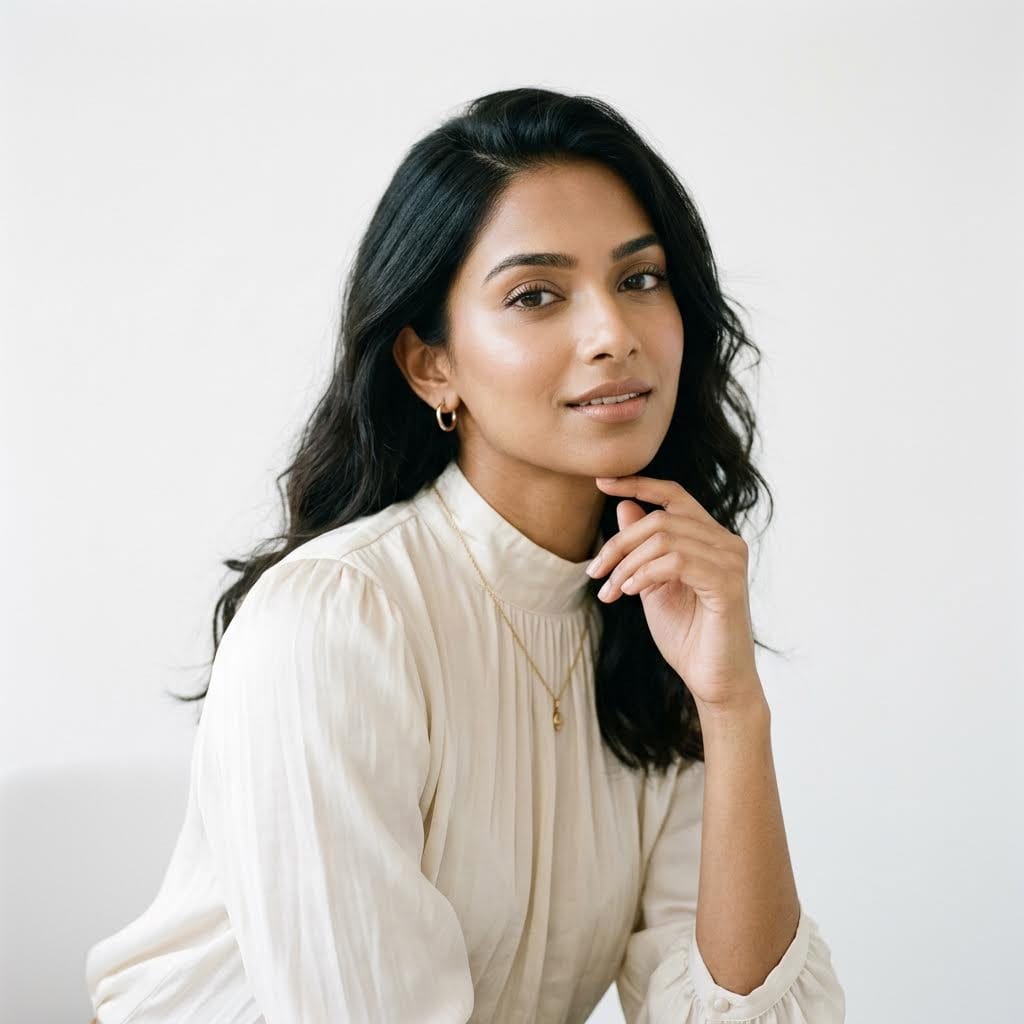
Same prompt, same settings. Seedream outputs on the left, Nano Banana 2 on the right.
Seedream leans into cinematic depth. The studio lighting in its outputs has more directional drama, with stronger shadows and warm skin tones. Nano Banana 2 pulls toward a cleaner, cooler editorial look. Highlights are more controlled, skin texture is more even, and the overall feel is closer to a commercial shoot than a fashion editorial.
For headshots and personal branding where the subject needs to look approachable and consistent, Nano Banana 2 wins. For editorial fashion where you want mood and stylistic character in the output, Seedream gives you more to work with.
Use Case 2: Product Photography for E-commerce
Product photography is where the economics of AI image generation really matter. If you are running an e-commerce operation and need hundreds of product variants, the quality floor and consistency of a model determines your workflow costs.
Seedream 5.0 Lite
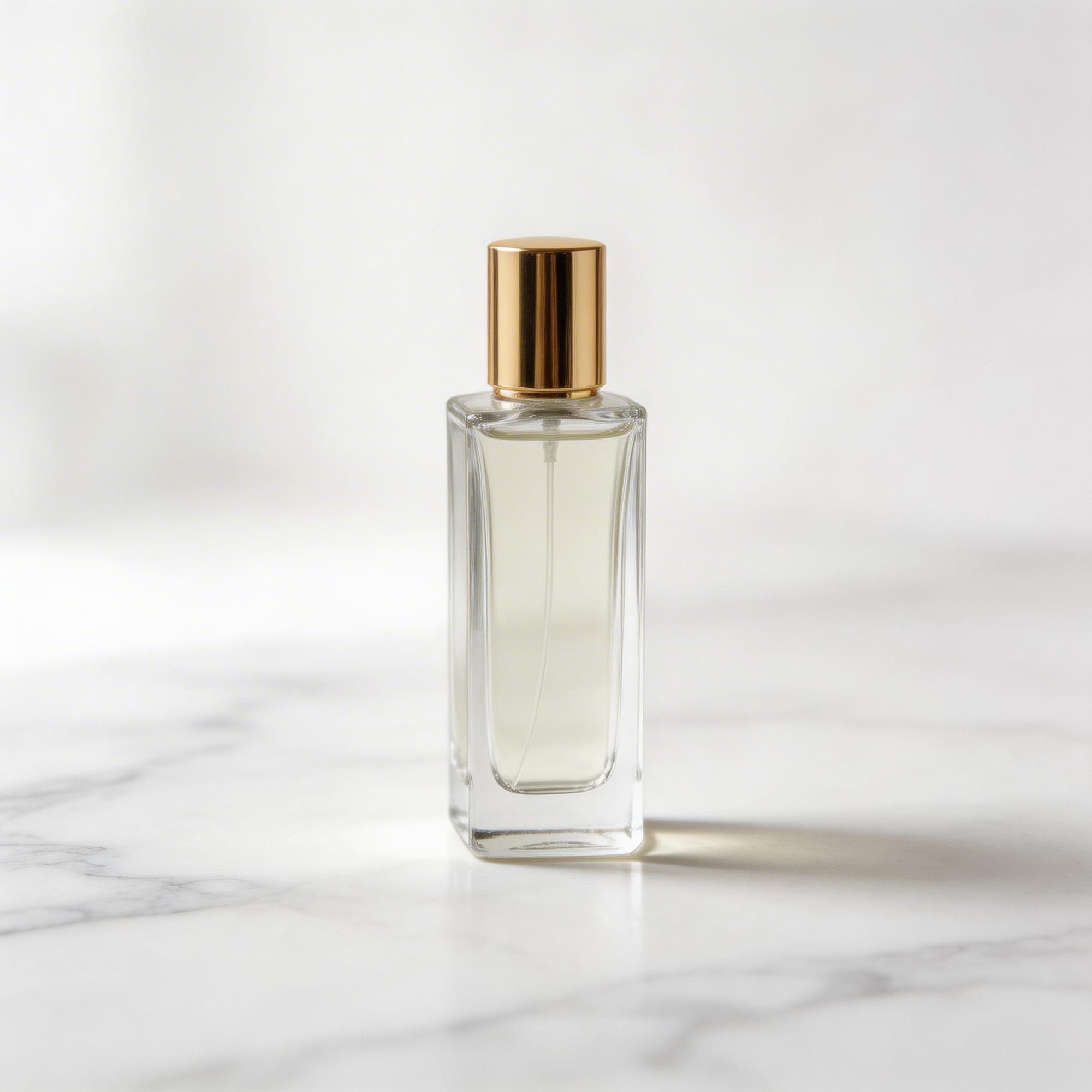
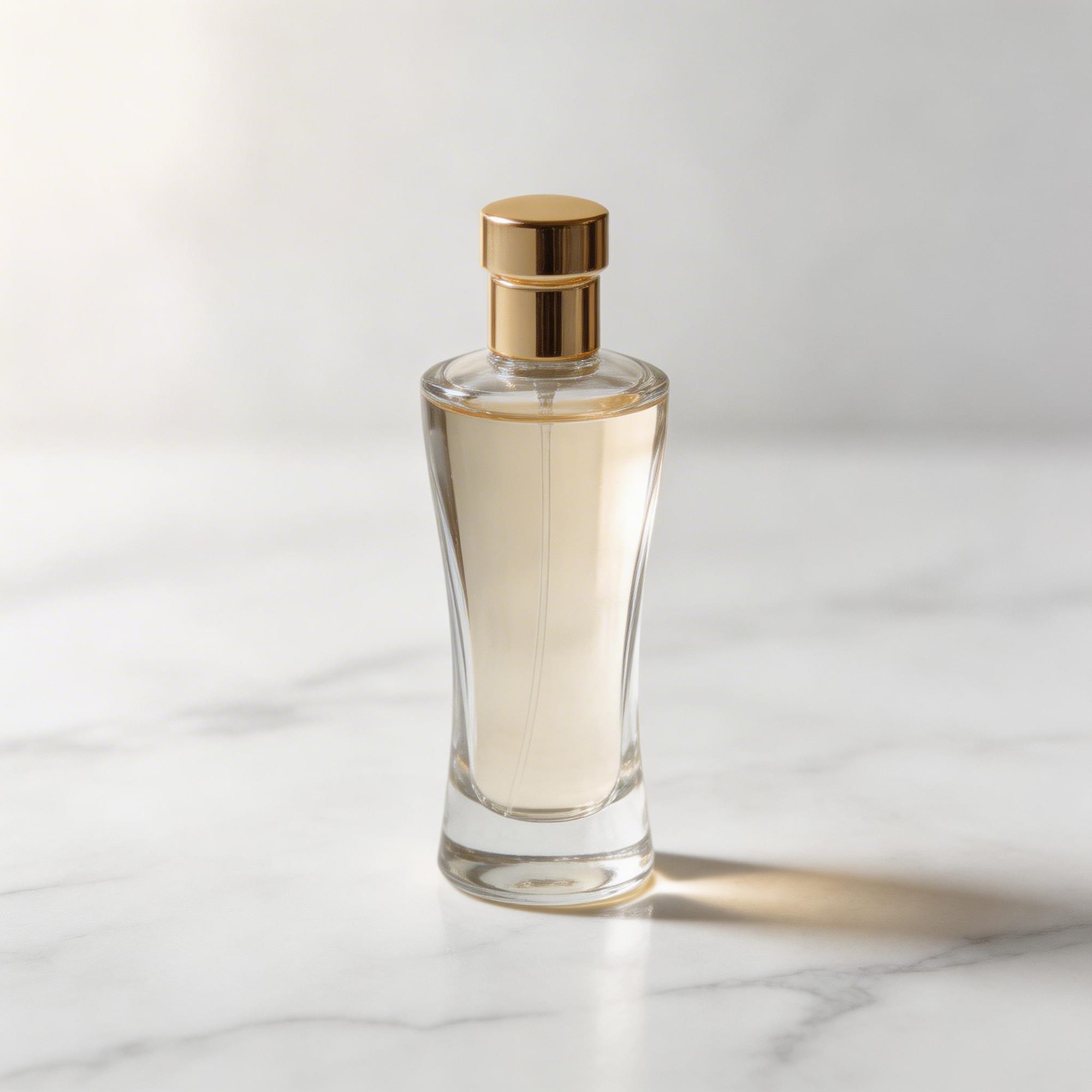
Nano Banana 2
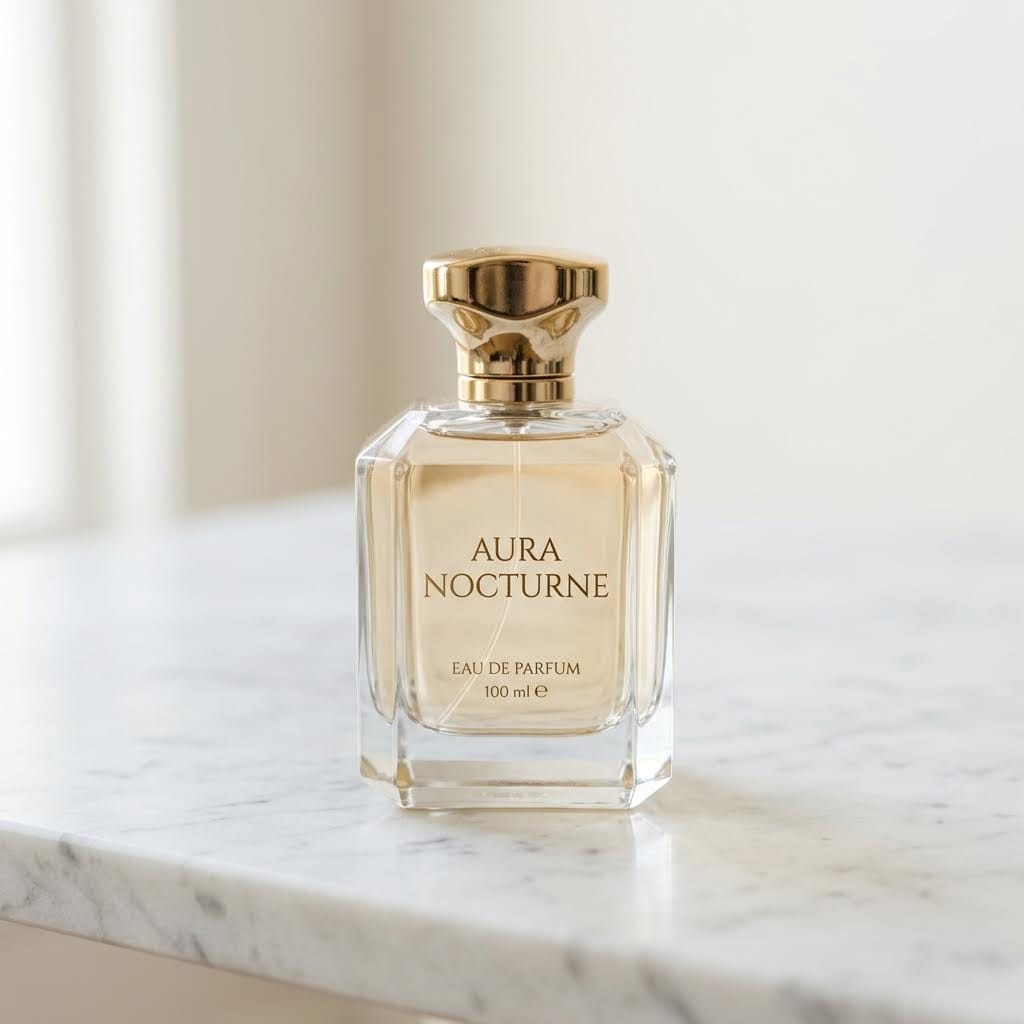

Same prompt, same settings. Two outputs per model.
Both models produce commercially usable product shots. Seedream generates richer material textures, and the glass rendering in its perfume bottle outputs has more internal complexity. Nano Banana 2 renders the marble surface with more geometric precision and handles the shadow physics more accurately.
For high-volume e-commerce catalogues where you need consistent, neutral product images, Nano Banana 2 gives you a more predictable baseline. For premium campaign imagery where the product needs to feel aspirational, Seedream's stylistic depth is the better choice.
Use Case 3: Typography and Text Accuracy
This is where the models diverge most clearly. Rendering accurate, readable text inside an image has historically been one of AI's hardest problems. Both 2026 models have made real progress, but there is a measurable gap.
Seedream 5.0 Lite


Nano Banana 2
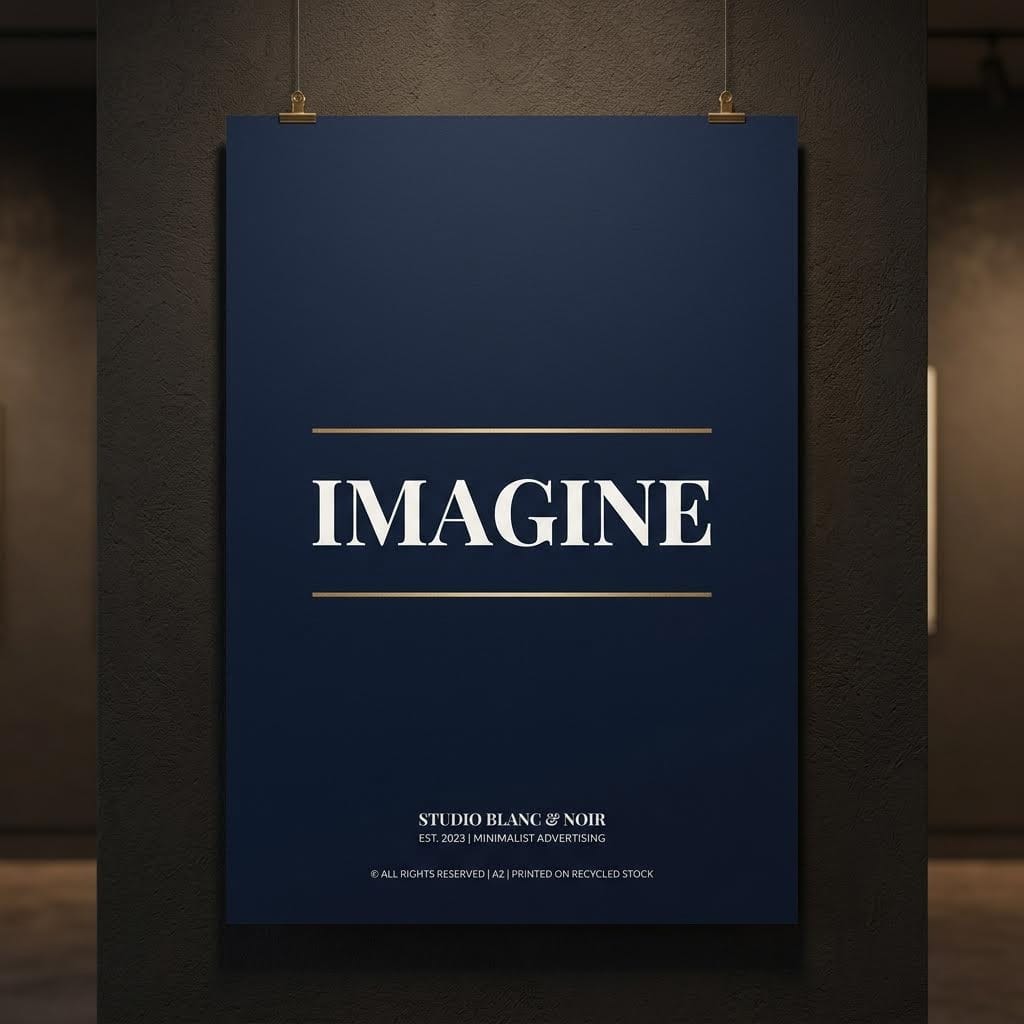
Two Seedream outputs vs one Nano Banana 2 output. Nano Banana rendered the text with higher precision.
Nano Banana 2 rendered the word IMAGINE correctly and precisely, with clean baseline alignment and consistent letterform weight. The gold accent lines landed exactly where they should. Seedream's outputs were stylistically richer, with more ornate typography treatments, but letter accuracy and spacing consistency were less reliable across generations.
For any work where text accuracy matters, specifically advertising copy, product labels, poster designs, and UI mockups, Nano Banana 2 is the safer bet. Seedream is improving, but if a misspelled word in a poster is a problem for your workflow, test carefully before committing.
Use Case 4: Architectural Scene Realism
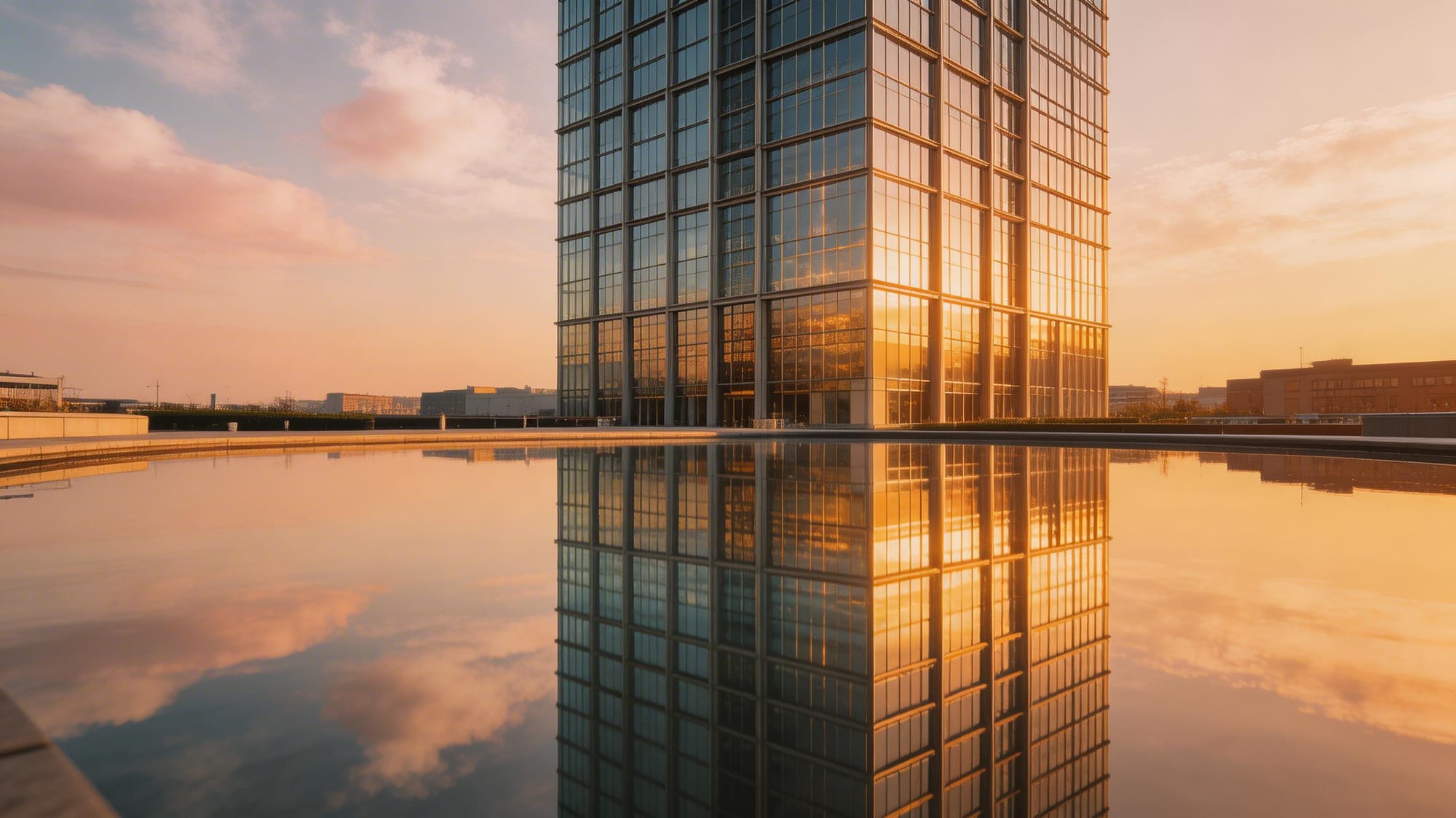
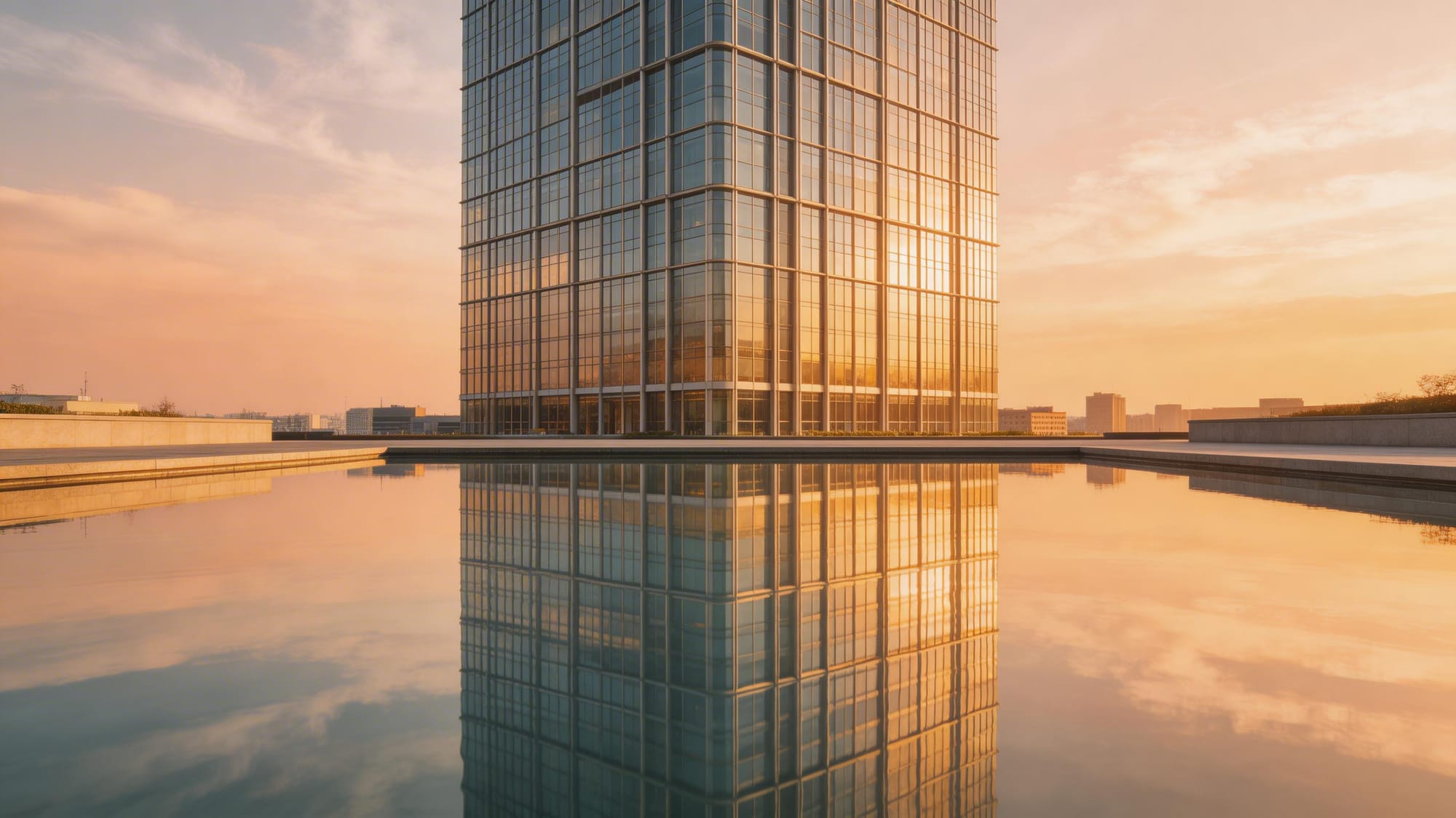
Architecture prompts are a useful stress test because they combine physical material rendering, lighting physics, and spatial composition simultaneously. Getting the glass, the water reflection, and the lighting direction all correct at once is genuinely hard for any model.
Seedream 5.0 Lite
Nano Banana 2
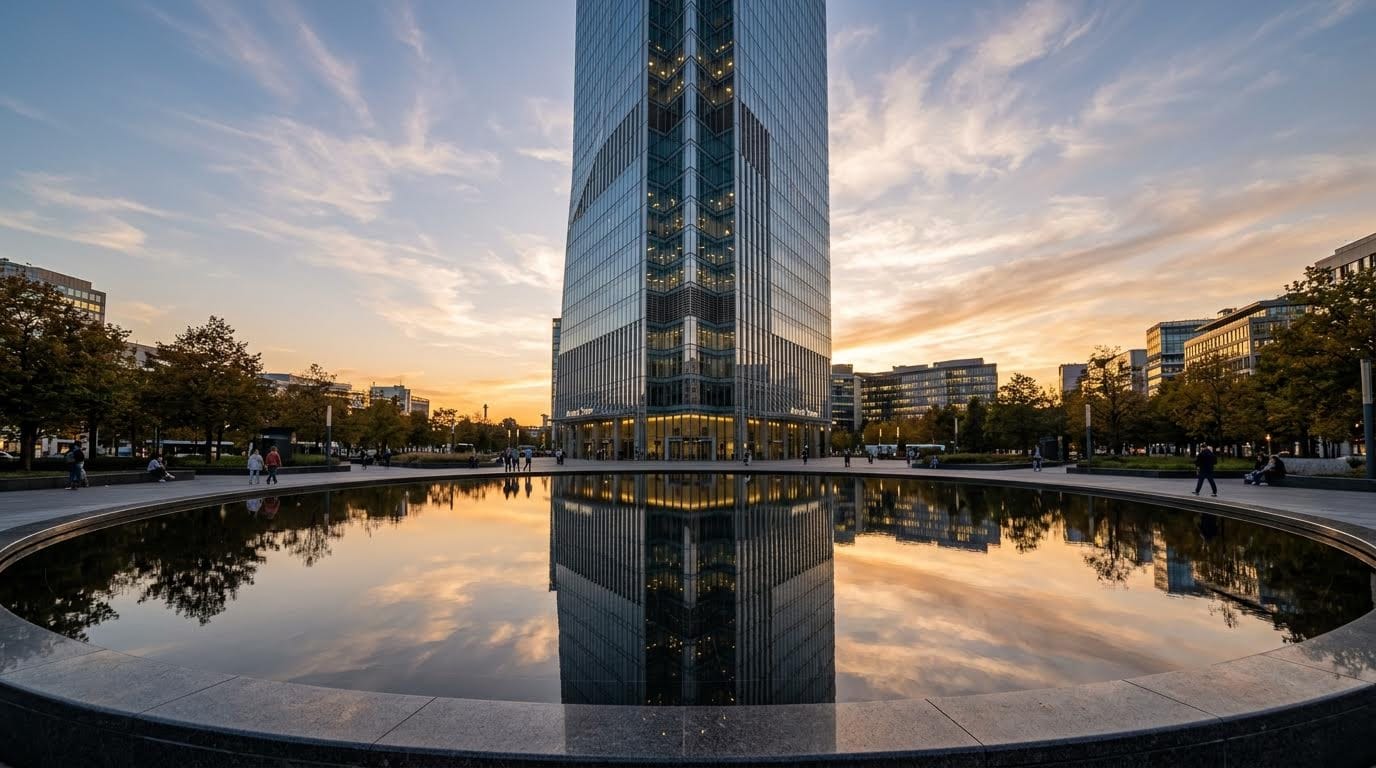
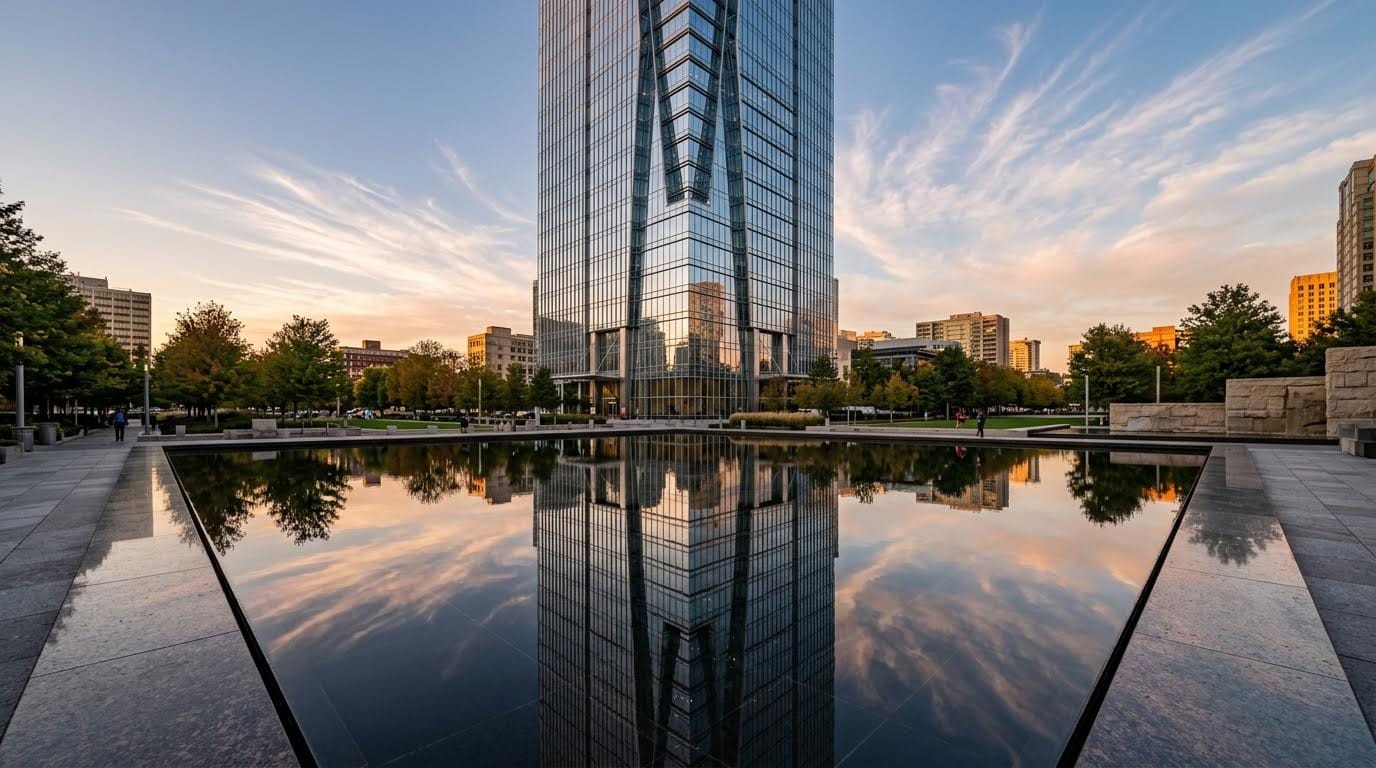
Architecture scene: same prompt, both models. Seedream leans cinematic; Nano Banana 2 prioritizes physical accuracy in the reflections.
Seedream handles scene hierarchy well. The building, fountain, sky, and reflections all feel like they exist in the same physical space, with consistent directional lighting. Nano Banana 2 goes further on material precision: the glass facade texture is more detailed, and the water reflection geometry tracks more accurately. For architectural visualization where a client will look closely at materials and structure, Nano Banana 2 is the more dependable tool. For moodboards and campaign imagery where you want the scene to feel cinematic, Seedream is faster and more expressive.
Use Case 5: Illustration and Creative Style
Stylized illustration is a category where the models' philosophical differences show clearly. Seedream is designed to interpret creative intent broadly. Nano Banana 2 is designed to reason precisely. Which one wins depends on what "good" looks like for your project.
Seedream 5.0 Lite


Nano Banana 2


Isometric smart city illustration: same prompt, both models. Seedream goes richer and more complex; Nano Banana 2 is cleaner and more structured.
Seedream's outputs are more visually complex, with denser scene construction, richer lighting variety, and stronger stylistic character. The neon reflections and layered depth in its city renders feel more immersive. Nano Banana 2 produces cleaner, more structured outputs with better geometric consistency in the isometric grid. If you are building a pitch deck and need the illustration to read clearly at a glance, Nano Banana 2 is the safer pick. If you are creating a hero image for a landing page and want the artwork to feel crafted and detailed, Seedream delivers more visual depth.
Image-to-Image: Where the Comparison Gets More Interesting
Text-to-image is the obvious comparison. But image-to-image is where most production workflows actually live. Real pipelines start with an existing asset, a product shot, a portrait, a room render, and then transform it. The two models diverge more here than in text-to-image.
For each test below: same source image, same transformation prompt, both models. The layout shows source on the left so you can judge how much each model respected the original.
Image-to-Image 1: Fashion and Virtual Try-On
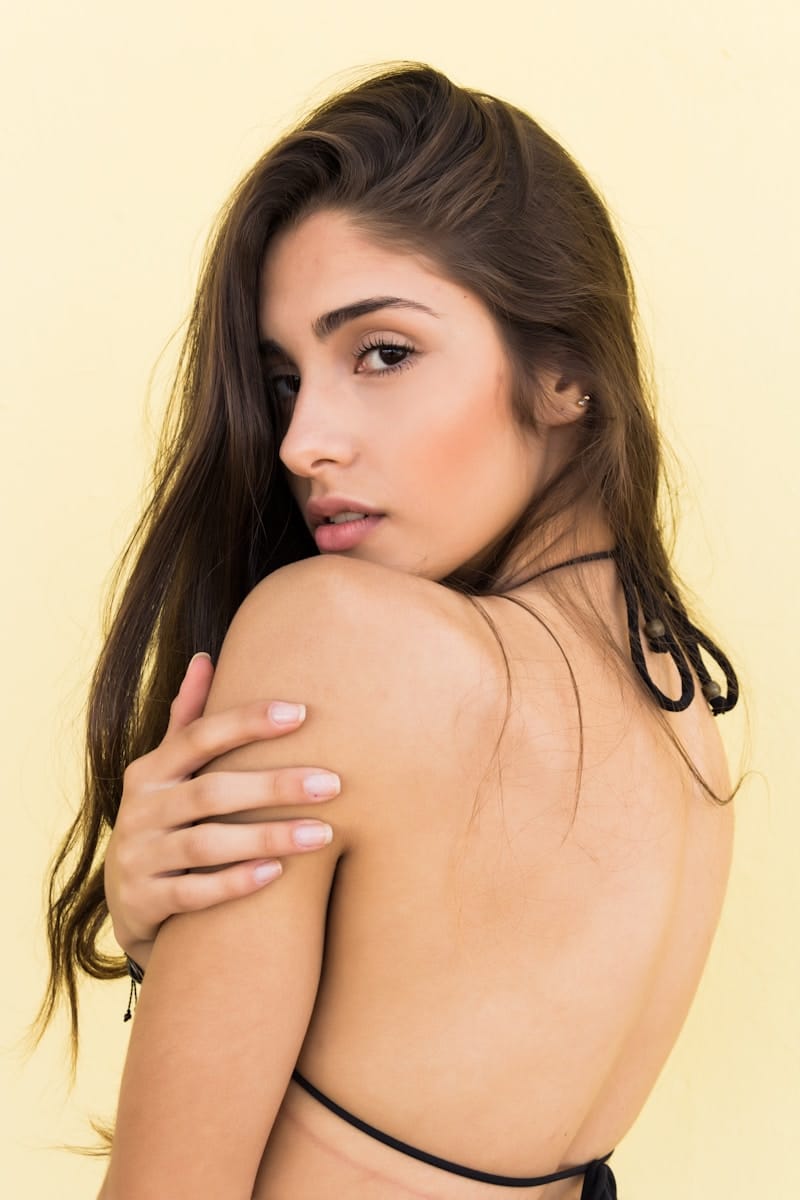
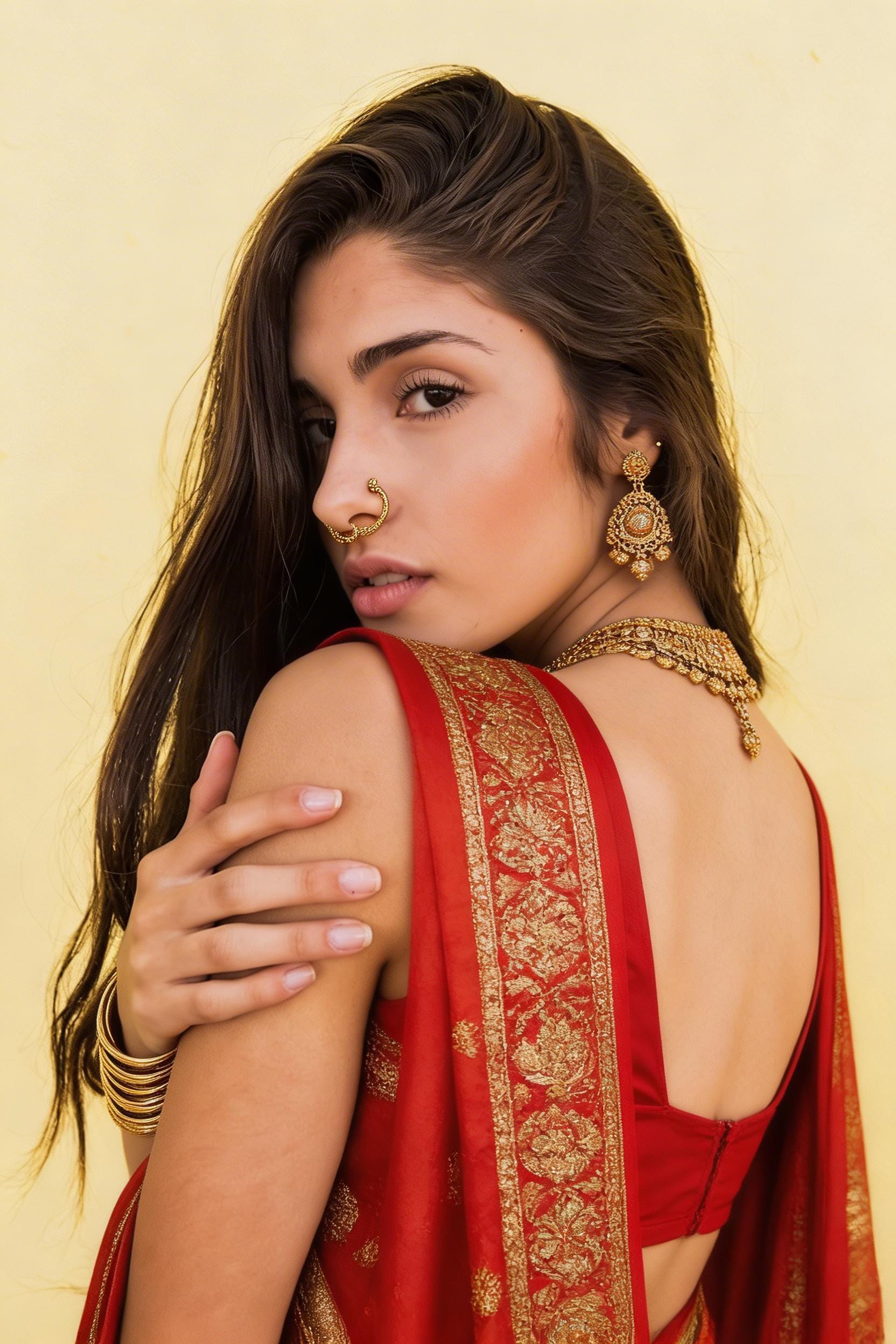
Fashion try-on is one of the highest-value commercial applications for image-to-image generation. Brands want to show a garment on a model without a reshooting for every SKU. The test: take a clean editorial portrait and swap the outfit to a traditional Indian saree.
Source Image
Seedream 5.0 Lite
Nano Banana 2
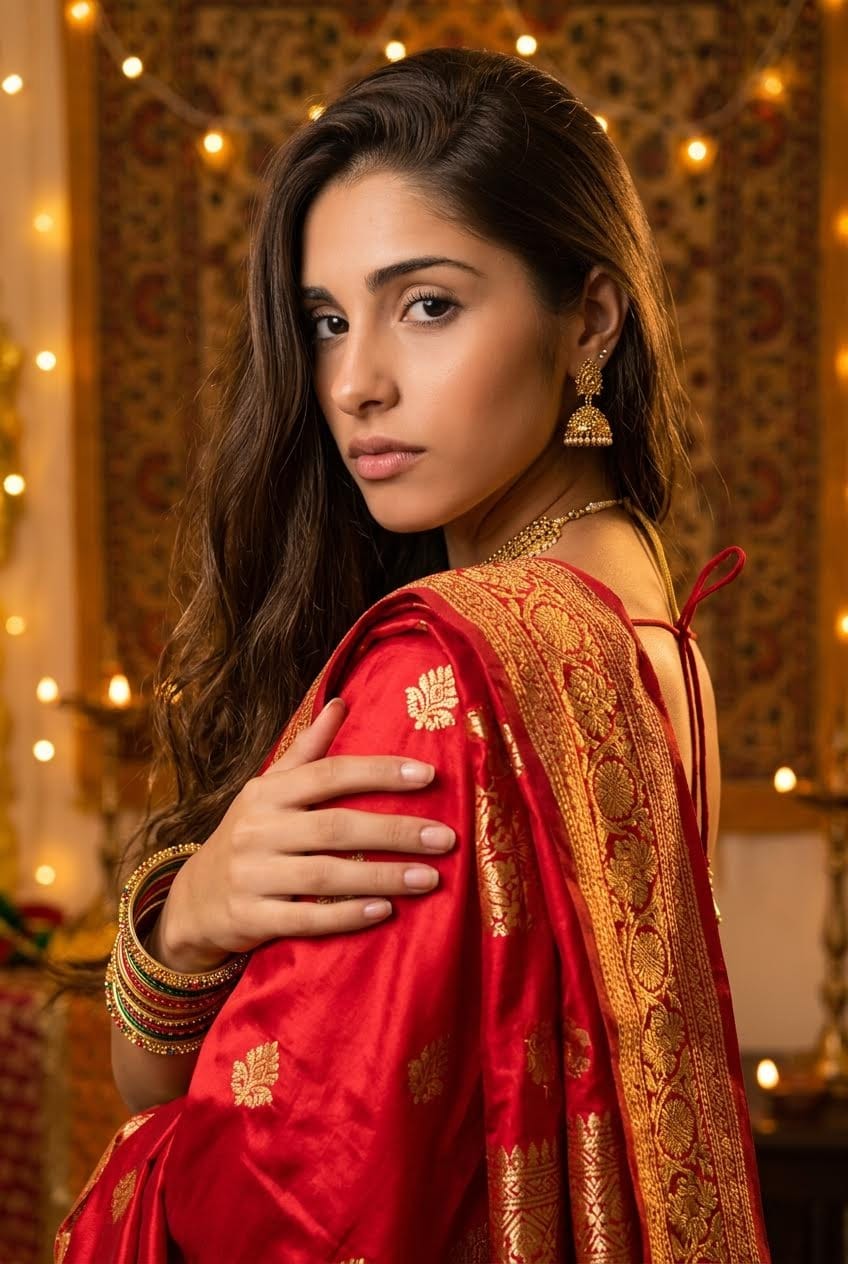
Same portrait, same transformation prompt. How well each model changes the outfit while preserving the identity.
Fashion and virtual try-on is one of the highest-value commercial applications for image-to-image. Brands want to show garments on models without reshooting every SKU. Seedream renders the saree with richer color saturation and more dramatic draping, giving an aspirational editorial feel. Nano Banana 2 focuses on garment structure accuracy: the fabric physics, how the pleats fall, and the embroidery detail feel more technically correct. For fashion e-commerce where customers need to trust what the garment looks like, Nano Banana 2's literal fidelity is more reliable. For brand campaign imagery where visual impact matters more than technical accuracy, Seedream's version is more striking.
Image-to-Image 2: Style Transfer
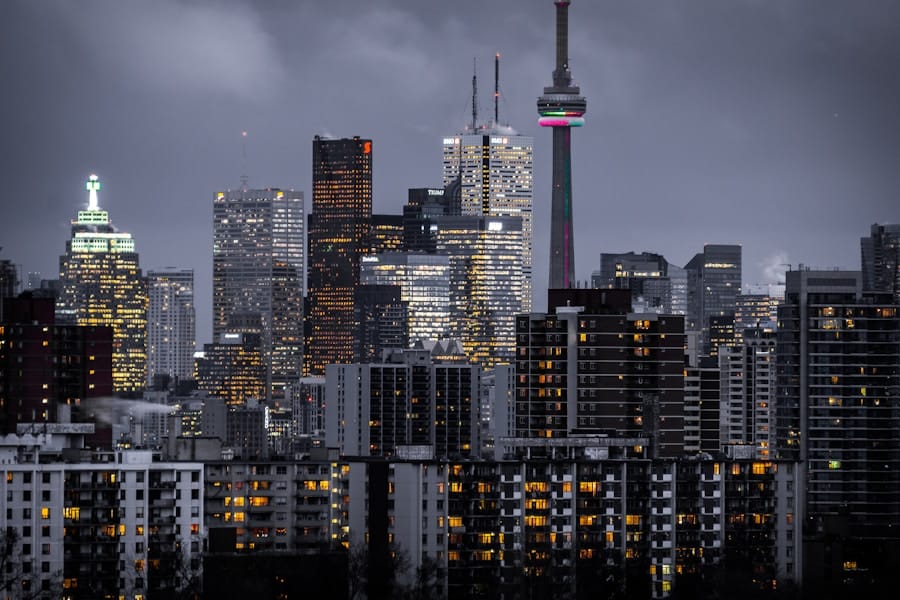
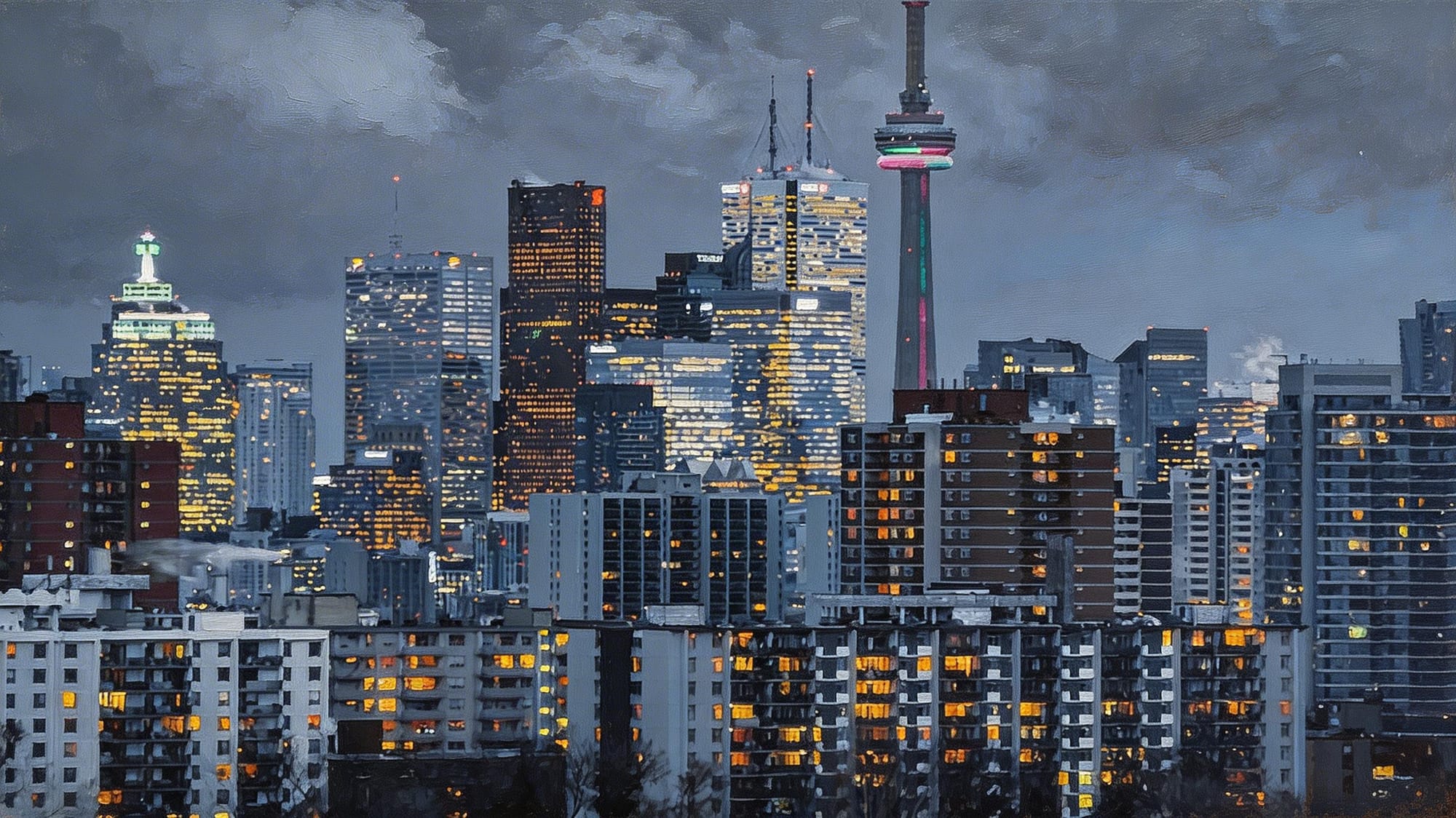
Style transfer pushes both models to separate content from aesthetic. The test: take a modern architectural photograph and render it as an Edward Hopper oil painting, preserving the building's structure while completely changing how it looks.
Source Image
Seedream 5.0 Lite
Nano Banana 2

Same photo, same style prompt. How aggressively each model applies the style while keeping the subject recognizable.
Style transfer is a good stress test for how well a model separates 'what is in the image' from 'how it looks.' Seedream commits more aggressively to the painterly style, sometimes losing fine architectural detail in favor of expressive brushwork. The result feels more like a real artist's interpretation. Nano Banana 2 threads the needle more carefully, keeping windows, structural lines, and spatial relationships intact while still applying the oil painting texture convincingly. For production use where the original content needs to remain recognizable, Nano Banana 2 is the safer choice. For creative work where you want the model to make bold stylistic decisions, Seedream's willingness to fully commit to the aesthetic is more useful.
Image-to-Image 3: Product Staging and E-commerce
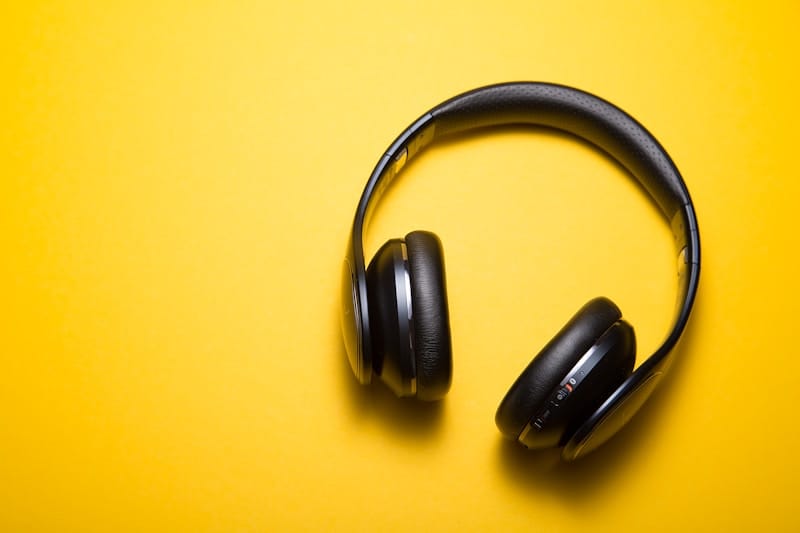
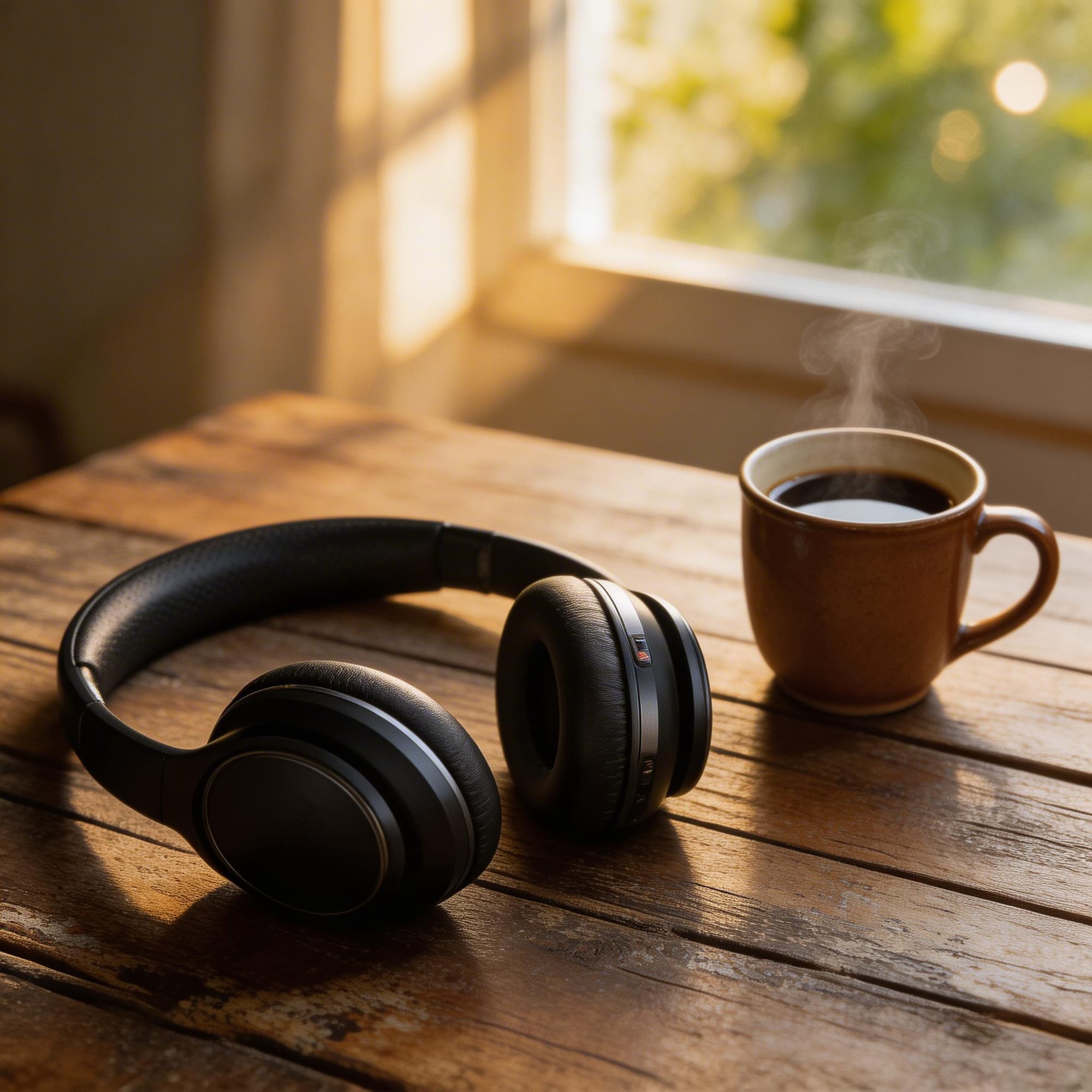
Product staging via i2i lets brands photograph products once in a studio, then generate multiple lifestyle contexts without location shoots. The test: take a studio headphone shot on a neutral background and place it in a warm morning desk setting.
Source Image
Seedream 5.0 Lite
Nano Banana 2
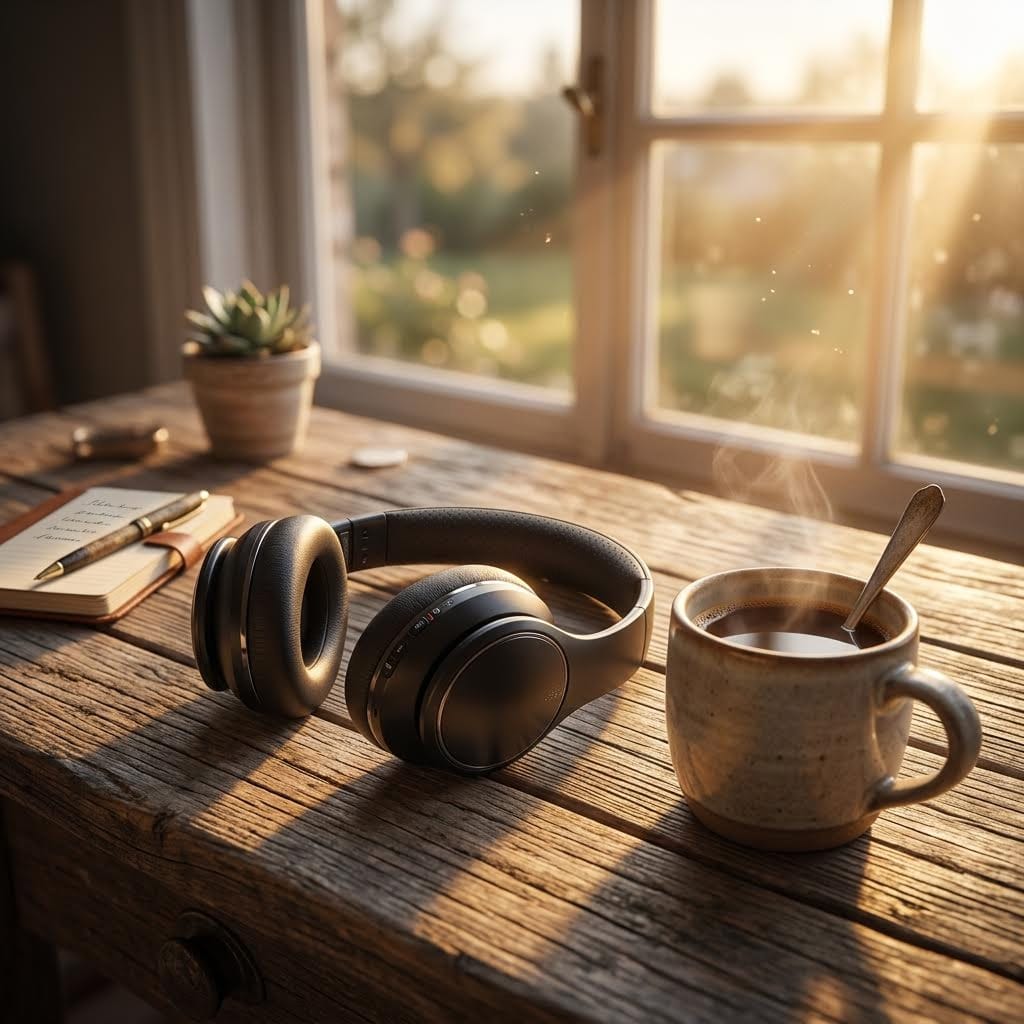
Studio product shot transformed to a lifestyle setting. Product identity preservation varies significantly between models.
Product staging is one of the most economically valuable i2i applications for e-commerce. The critical question is whether the product stays recognizable. Seedream integrates the headphones into the scene with more visual warmth and atmosphere, but it tends to interpret the product more loosely, sometimes changing colors or shapes. Nano Banana 2 treats product accuracy as a constraint, keeping the specific model details, brand markings, and physical shape more faithful to the source while placing it in the new setting. For any commercial product photography workflow where product fidelity is non-negotiable, Nano Banana 2 is the clear choice. Seedream works better for abstract or texture-based products where loose interpretation is acceptable.
Image-to-Image 4: Interior and Architectural Re-imagining
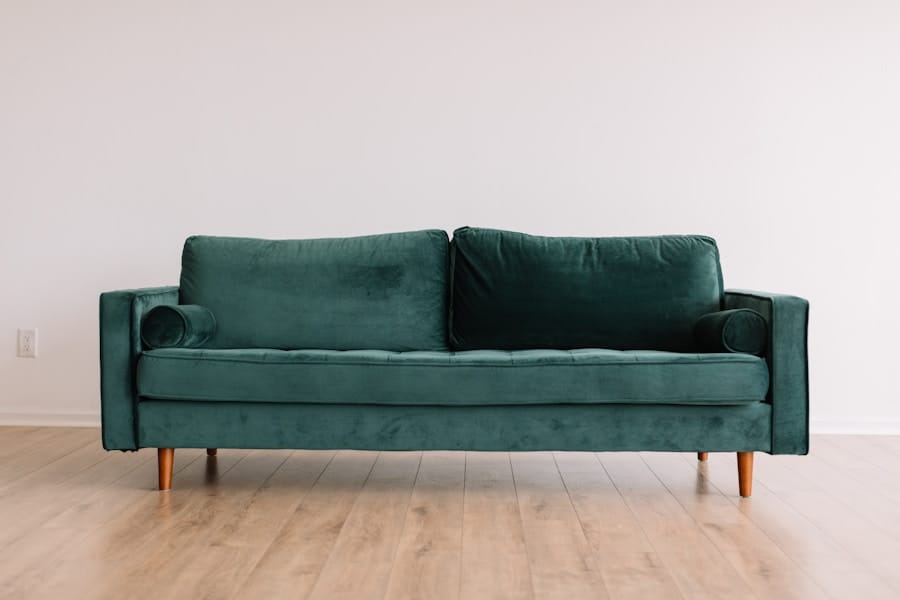
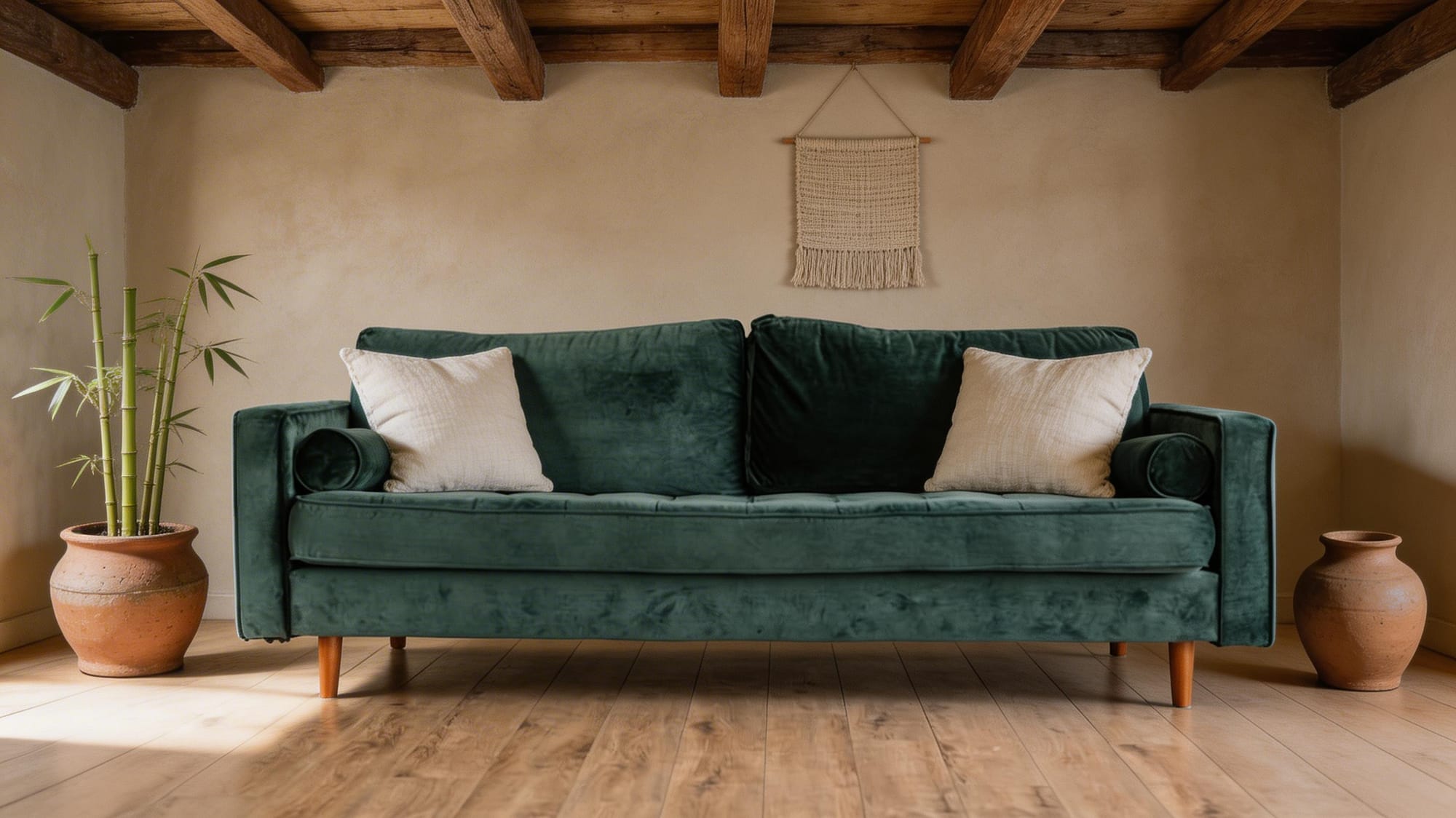
Interior redesign via i2i is a real workflow for architects and interior designers showing clients alternative versions of a space. The test: take a contemporary minimalist living room and redesign it in Japanese wabi-sabi style, keeping the spatial layout while changing everything about the materials.
Source Image
Seedream 5.0 Lite
Nano Banana 2
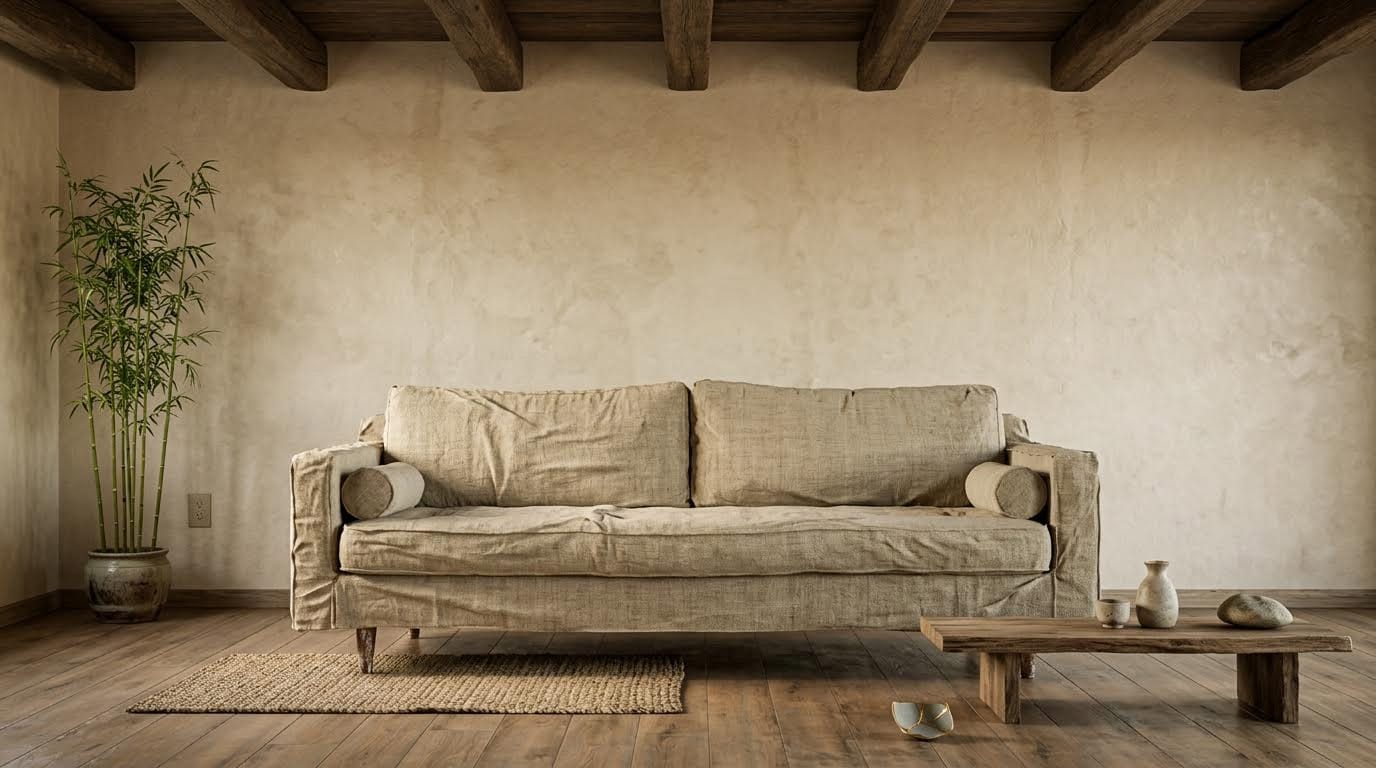
Same room, same wabi-sabi prompt. Spatial structure fidelity is the key differentiator here.
Interior re-imagining is high-stakes for design professionals. The client needs to see their actual space transformed, not a generic wabi-sabi room that happens to have a sofa in it. Seedream produces a more dramatically transformed result, with richer textural variety in the natural materials and more pronounced aesthetic character. But it sometimes repositions furniture or changes the spatial proportions. Nano Banana 2 is more conservative with spatial structure, keeping furniture placement and room geometry close to the source while changing the surface materials, textiles, and decorative objects. For client presentations where layout accuracy matters, Nano Banana 2 is the more reliable tool.
Speed, Resolution, and Pricing
Here is how the two models compare on the operational dimensions that matter for production workflows:
| Parameter | Seedream 5.0 Lite | Nano Banana 2 |
|---|---|---|
| Segmind API Price | $0.035 / image | $0.077 / image |
| Generation Speed | ~30 seconds | ~40 seconds |
| Native Resolution | 1K, 2K, 3K native | 1K to 4K native |
| Batch Generation | Up to 15 images per call | Up to 4 images per call |
| Text Accuracy | Good, improving | 92%+ precision |
| Aesthetic Style | Cinematic, stylized | Clean, photorealistic |
| Real-Time Web Knowledge | Yes, live retrieval | Yes, Google Search |
| Content Credentials | Watermark standard | SynthID + C2PA |
At scale, the pricing difference is meaningful. If you are generating 10,000 images a month, Seedream saves you roughly $420 compared to Nano Banana 2, before any volume discounts. For teams running e-commerce catalogues or social media content pipelines, that math compounds quickly.
How to Call Both Models via Segmind
Both are available through the same Segmind API key. Here is the minimal request for each:
Seedream 5.0 Lite
curl -X POST "https://api.segmind.com/v1/seedream-v5-lite-text-to-image" \
  -H "x-api-key: YOUR_API_KEY" \
  -H "Content-Type: application/json" \
  -d '{
    "prompt": "Luxury glass perfume bottle on white marble, professional studio photography",
    "aspect_ratio": "1:1",
    "size": "2K",
    "max_images": 1,
    "watermark": false
  }'
Nano Banana 2
curl -X POST "https://api.segmind.com/v1/nano-banana-2" \
  -H "x-api-key: YOUR_API_KEY" \
  -H "Content-Type: application/json" \
  -d '{
    "prompt": "Luxury glass perfume bottle on white marble, professional studio photography",
    "aspect_ratio": "1:1",
    "output_resolution": "1K",
    "output_format": "jpg",
    "num_images": 1,
    "thinking_level": "minimal"
  }'
Both endpoints return binary image data directly. No polling required.
When to Use Each Model
Based on the comparison tests above, here is how I would think about the decision:
Use Seedream 5.0 Lite when you need high-volume output, cinematic or stylized aesthetics, batch generation for storyboards or campaign variants, and cost efficiency at scale. It is the better tool for creative direction where the output should feel artistically intentional rather than clinically precise.
Use Nano Banana 2 when text accuracy matters, when you need physically precise renders (reflections, materials, geometry), when you are targeting print or large-format output that requires native 4K, or when your downstream use requires C2PA content credentials for institutional publishing.
For most Segmind users building products or running content pipelines, Seedream 5.0 Lite is the starting point. The pricing is better, the throughput is higher, and the creative range is wider. Nano Banana 2 is the specialist you reach for when Seedream's outputs are not precise enough for a specific job.
Both are available right now. Try them with your own prompts at segmind.com.
All images in this post were generated using the Segmind API. Seedream 5.0 Lite outputs are at 2K resolution. Nano Banana 2 outputs are at 1K resolution.